Old People Make Good Music Too

It’s no secret that music culture is obsessed with youth: blogs and review sites often center around “break-out” or “rising” artists and are usually targeting a young, often college-aged demographic of hip listeners. Music is often linked to image and coolness, and young people are decidedly better-looking and cooler than old people. This is accompanied by a similar mini-backlash against older artists, who are frequently dismissed as something like “dad rock” or have their current work ignored in favor of their classics from when they were the young people being covered by the press and listened to by the cool kids.

When I made my albums of the decade list a few weeks ago, I noticed that the top of the list was dominated by older, more experienced artists. PJ Harvey is 45, Fiona Apple is 37 and has been releasing music since she was 19, Kevin Shields of My Bloody Valentine is 52, Björk is 49, Kristin Hersh of Throwing Muses is 48, Kate Bush is 56, Mary Timony of Ex Hex and Wild Flag is 44. This wasn’t a conscious attempt to zig while everyone else zags — they were just the albums I liked the most from the last five years.

The common theme with all these artists is that they’ve been around for awhile. Most of them have released several albums worth of material, often fading in and out of popularity as they continued to follow their various muses. There is also a general perception with all of them that they’ve already “peaked” with albums they made when they were younger. Their albums on my list all were well-reviewed, but they weren’t appearing on the cover of magazines or whatever the equivalent of that is now in 2015. The statement my list ends up making (largely unintentionally) is that these artists still have something to say in their work, and it’s often overlooked in favor of less interesting bands that either drive more traffic to a website or can be built by whoever is hyping them.

A lot of this feeling comes from my own background as a self-proclaimed “wannabe writer.” At age 25 now, I’ve yet to feel like I have any sort of deep perspective or statement to make in anything I write, because I just haven’t lived enough — I’m still trying to figure everything out. When I write, it’s in an effort to improve my craft, and I feel with each essay or story (regardless of quality) I learn something and get better. I don’t think writing random blog posts is directly comparable to making music, but the general concept of honing the craft and constantly improving is something I think often holds.

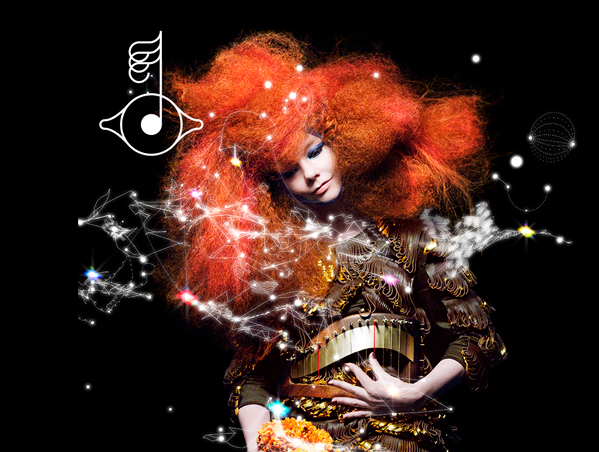
Nearly all the albums at the top of my list had that feeling in them: they were works that the artists had been working towards for several years, and often synthesized elements of their earlier work in a satisfying way. Let England Shake tied together so much of PJ Harvey’s music, and felt like something only an experienced artist who knows exactly what she’s doing could make. The Idler Wheel… was Fiona Apple’s most confident album, a distillation of what has made her such a popular musician. M B V  was the result of an over 20 year odyssey, and drew on both My Bloody Valentine’s past while also hinting at their potential future. I’ve written enough about Vulnicura, but it goes without saying that a much younger artist couldn’t have made an album that was drawing from years of love and heartbreak.

Purgatory/Paradise is an album that was almost entirely ignored, but was really ambitious, taking Throwing Muses’ classic sound, smashing it up, and re-imagining it. Kate Bush’s 50 Words for Snow had incredibly deep storytelling, and was a vastly uncool piano-based album with songs that stretched past 10 minutes in length. It was a real crafted work made by someone who takes their art seriously and is good at it. Maybe the most interesting example is Mary Timony/Ex Hex: it was my favorite album of 2014, in part because I felt it sounded young, even though Timony is in her mid-40s. It was an energetic, fun rock album, made by someone who simply knows how to write a great song, a case of an older artist beating the youngsters at their own game.

My appreciation for these albums is part of a type of fandom that I fear is getting less common, which is being a huge fan of an individual artist and following them on their journey from album to album. I always see their careers as being like a story, and albums like these as compelling chapters in them. As the internet bombards listeners with seemingly infinite music and new artists keep being recycled to feed the hype machine, this context starts to get lost — it stops being about the artists and starts being more about whatever sells day-to-day. Each album is just used to feed discussion for a day or a week (if it’s good) and then is forgotten about because something else comes along so quickly.

It is hard to make this sort of argument without sounding jaded at “the kids these days,” and taken too far it can get into the absurd Rolling Stone territory where dinosaur rockers consistently crap out “five star albums” into their 90s. But I can’t even count how many times I’ve seen a young band get talked up, only to instantly recognize that it has nearly nothing to do with the music — it’s either because they look like a cool band or they fit whatever story a site is trying to sell. They make the “albums of the year” list once, then are forgotten about two albums later, because some other young band has taken their place.

All of this has instilled me with a lot of skepticism for any young hyped-up band, and an appreciation for artists who have proven they make music that can endure. Youth is often exciting, but in terms of actual artistic statements or expression, it’s hard to buy that so many people my age are actually making worthwhile, memorable work. Sure, there’s prodigies like PJ Harvey, who made Rid of Me when she was 24, but that’s not normal. There’s something to be said for the artists who have been honing their craft for years or even decades, like PJ Harvey now, and are still creating music that has real thought and feeling in it.
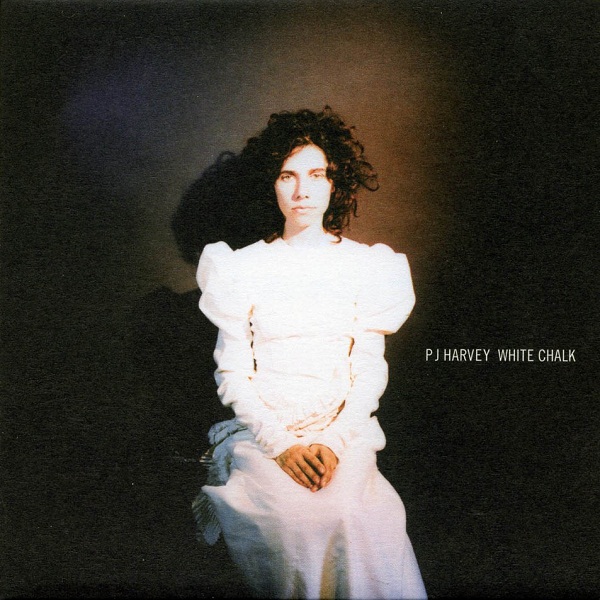
Favorite 2000s Albums: #8 – PJ Harvey – “White Chalk”

Listen on Spotify

In 2004, PJ Harvey released Uh Huh Her, the one album in her catalog that I don’t consider myself a fan of. It’s not a bad album, but its lo-fi guitar tunes felt like a retread coming from an artist who I’ve always loved because of how she defies expectations. While some always wish that PJ would keep making music that has a certain sound, I think she’s at her best when experimenting and doing something that nobody expects her to do.

This is why I think 2007’s White Chalk is probably her most underrated, and possibly the album by her I respect the most. After being known early on for her aggressive bluesy guitar songs (and even being acclaimed earlier in the decade for the straight-forward rock of Stories from the City, Stories from the Sea), PJ chose to set down the guitar entirely, instead writing a set of songs for the piano — an instrument she admittedly barely knew how to play. She also traded in her deep roar of a voice, singing the songs on White Chalk in a high, ethereal voice that is at the very top of her range.

The resulting sound is ghostly, eerie, creepy, but also beautiful. It creates a unique distillation of moods that only PJ Harvey ever seems to be able to conjure out of me. It blows my mind that the same artist who made this album also made Rid of Me, which topped my 90s list and was pure anarchy, chaos, and rage. On White Chalk, everything is extremely delicate, including PJ’s personality which has gone from larger than life (like on “50 ft Queenie”) to someone who seems unsure of herself at every turn. Meanwhile, Rid of Me‘s swaggering rock has been replaced by songs that rarely feature much more than the piano or a broken harp.

White Chalk ends up pulling off something that very few modern albums do: it sounds completely unlike anything else that came before it. It is an incredibly self-contained work that manages to create its own little universe in the span of 34 minutes. PJ takes everything that makes her unique and identifiable as an artist and reduces all of it to the bare essentials.

Despite the new sound and a completely different persona, White Chalk is still identifiable as a PJ Harvey album. The one constant in her work over the years has been her lyrics, and on White Chalk they hit harder than ever with the spare instrumentation. A recurring theme throughout the album seems to be childbirth or abortions: on “When Under Ether” she sings “something’s inside me/unborn and unblessed/disappears in the ether/one world to the next,” joined by an ominous, repeating piano line. The title track is one of my favorite songs by her, a lovely meditation on her homeland of Dorset that also references an unborn child at the end.

Most of White Chalk is about a feeling of being solitary and lonely, but it’s also a more hopeful album than some give it credit for. “Before Departure” sounds like a funeral song of sorts, but I think it’s more about a choice to live a simpler life. “Silence” has similar themes, with PJ singing “I freed myself and remained alone.” Of course, there’s plenty of darker material on the album too, which is par for the course for PJ.

While critics usually lap up anything that PJ throws their way, the response to White Chalk was more muted, understandably so. It’s an extremely hard album to pin down from an artist who is the same way. It’s also not the type of album that ever makes these silly end-of-decade lists — it was perhaps self-contained to a fault, containing little in the way of broader statements about modern culture or life. With some patience, though, White Chalk proves itself to be maybe the most daring album in PJ’s catalog, an album that is completely unlike anything else and reveals its greatness slowly, in a different way than its predecessors.

2011: A Retrospective and Look at the Future

As the year comes to an end, I thought it’d be fitting to take a look back at some of the events and debates that stood out for me in the last year.

The death of Trish Keenan

Most of the year-end “in memoriams” will be focused on Amy Winehouse, but no musician death affected me this year like Trish Keenan’s, who died on January 14th of pneumonia at age 42. Keenan fronted the UK dream pop group Broadcast, who, while consistently admired, never really got the level of popularity and acclaim that I felt they deserved. They quietly made some of the most beautiful and original music of the last decade, drawing from their 60’s inspirations like the United States of America and obscure foreign soundtracks to create something completely new.  At the center of their sometimes dark, psychedelic sounds was Trish and her warm vocals, which ensured that there was always a heart at the core of their music.

Trish’s death struck me because of how unfair it was for such an amazing singer to die of something like pneumonia, and because her death seemed to be met with relative shrugs or lack of acknowledgement from a lot of places. Considering her band was responsible for some of my favorite music ever, it was depressing to see it all get glanced over, or to see the band’s plays spike on last.fm before settling back down to normal just a couple weeks later. Her death didn’t just remind me of how life can seemingly end at any moment, but also the inherent sadness that comes with loving a band that nobody else seems to care about.

I named my blog after their debut album in tribute (and because it’s a great name for a music blog anyways), and I’ll continue to preach the greatness of Broadcast everywhere, even if I just get met with shrugs.

The year of “boring”

The biggest ongoing debate in music this year seemed to surround one word: “boring.” Is music today boring? What music is boring? What does boring actually mean in the context of music?

For me, this has been a subject of my attention for a couple years, when I noticed that local indie radio station The Current was playing a lot of music that bored the hell out of me (typically mopey folk). But the issue really came to a head this year when widely celebrated albums by the likes of Bon Iver, James Blake, and Fleet Foxes were branded as “boring” by many people (including me).

One of my favorite music writers, Steven Hyden, wrote an essay about the topic for The AV Club, where he criticized those that lazily use the word “boring” to describe music. I agree with some of what he says, but disagree with some of it as well. For one thing, I don’t think people that call music “boring” are wearing it with a badge of honor, but instead are simply disappointed at the direction music has taken.

But I agree that the word “boring” is dumb to use for music, which is why I’ve struggled a lot with this issue in 2011. Because, as much as I hate saying it, a lot of music this year really was boring. It’s not just that the sound of a lot of these artists is so low-key and passive, but there’s also the sense that it’s all been done before.  More than ever before, a lot of the most acclaimed music this year seemed to be stuck in the past, either fixated on reviving some trend (like the whole 80’s easy listening revival done by artists like Bon Iver and Destroyer that still completely baffles me) or recalling a specific sound and era. Even as I enjoyed some of the music by these revivalists, I still found it frustrating that so many seemed to be swimming in their own influences instead of making something we haven’t heard before.

Lame indie kids schooled by female veterans

While the whole boring music thing was happening, with most of it propagated by the same types of male artists that have always dominated indie music, an interesting trend for me emerged this year: A whole bunch of female artists returned from long layoffs and made some of the best, most original music of 2011.

It started in February when PJ Harvey released Let England Shake, her first solo album since 2007’s White Chalk and likely her best in over a decade. Like all PJ Harvey albums, it was an original, literate piece of work, but it also benefited from a broader scope as her look at war and her homeland felt bold and provocative when so much music this year felt lifeless and limp.  Her contemporary in original female songwriting, Björk, also returned with her first new music since 2007 with the dazzling multimedia Biophilia project. Arguably Biophilia’s music didn’t live up to its ambitious iPad app packaging, gravity-based instruments, science classes, and all the other crazy stuff Björk was up to this year, but it reminded me of how refreshing it is to see an artist actually try something new and attempt to take music somewhere it hasn’t been before.

Elsewhere, all-female supergroup Wild Flag, which included Carrie Brownstein and Janet Weiss of the dearly departed Sleater-Kinney, released what I thought was the year’s best rock album in September. For Brownstein, who has spent the last few years blogging for NPR and appearing on Portlandia,  it was her first recorded music since that band’s 2005 album The Woods. Wild Flag also included Mary Timony who had been relatively under the radar since her mid-90’s work with Helium.  For members with such pedigrees, their debut album was wonderfully unpretentious, a celebration of the greatness of rock music coming at a time when we need it most.

The reclusive Kate Bush even came back with 50 Words for Snow, her first new music since 2005’s Aerial. With its seven songs clocking in at a whopping 65 minutes, Bush’s album was an ambitious work that was remarkably distant from any sort of current indie trends.  Its lengthy songs never wear out their welcome and showcase Bush’s knack for quirky storytelling. The song lengths became an issue for me as a couple songs I didn’t like as much took up about 1/3 of the album, but it also had some of my favorite songs of the year, especially the 13 minute “Misty” about Bush falling in love with a snowman and “Wild Man,” her ode to the yeti.

So what does it say about music that the most ambitious, thought-provoking music this year was made by females in their late 30-50’s?  I’m not really sure, but I do think today’s entitled indie youngsters could learn a thing or two from the artists that helped make indie music what it is.

(These veterans were joined by up-and-comers like St. Vincent, EMA, Tune-Yards, Eleanor Friedberger, etc.  Overall, I think this was probably the strongest year for female artists in a long time.)

Looking forward to 2012

When I started this blog because I was bored over the summer, I figured it would be a fun challenge for myself, but one that few other people would care about.  For the most part I think that’s still true, but I’ve had more activity than I was expecting on it and have already learned a lot (such as that putting pictures of Björk in your posts is a great way to get a lot of google images hits).  I’ve gained a lot of respect for websites I used to make fun of all the time now that I know how difficult it is to write about something so subjective.

For the next year, my goal is to listen and write fairly prolifically, with more focus on new music than I had in the past year.  Hopefully that will lead to more people reading and taking an interest in the blog, and who knows what happens from there.  I’m thankful to anyone who read or took an interest in my writing this last year, and hope you stay on board through 2012.  This blog wouldn’t be possible without you.  Well, actually it would be, but it’d be a lot sadder than it already is.