YAMANTAKA // SONIC TITAN is Really Cool

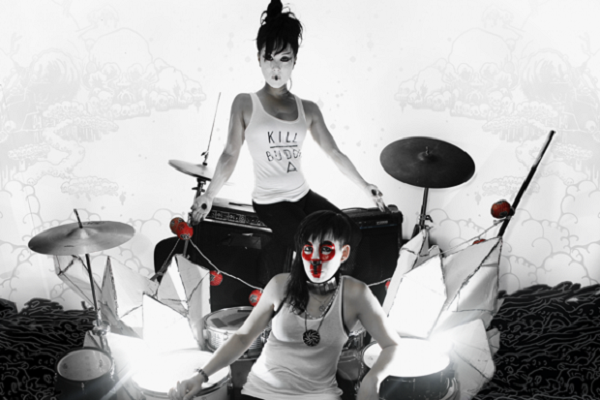
Sometimes I can’t really describe what exactly makes a band awesome, except that it’s instinctively “cool.” That’s the case for the YAMANTAKA // SONIC TITAN, a Canadian group fronted by drummer Alaska B and signer Ruby Kato Attwood that combines many disparate elements to create music that seems to be an attempt to redefine exactly what “music” is.

On their bandcamp page, where you can stream or buy their debut album YT//ST, they describe themselves as a “psychedelic noh-wave opera group fusing noise, metal, pop and folk music into a multidisciplinary hyper-orientalist cesspool of ‘east’ meets ‘west’ culture clash in giant monochrome paper sets.” It’s a more apt description than anything I could come up with. One thing is basically guaranteed: This band is unlike anything you’ve heard before. And in 2012, that’s quite an accomplishment.

The fact that I had never heard anything quite like the band is what really blew me away, and their 7-song, 30-minute album has become probably my favorite of the last couple of months. After seeing the description I expected them to fall into a trap of sounding like a different band on every song, but they’re able to take all of those influences and turn it into something that is extremely cohesive.  I never get the sense that the band is experimenting with a genre or that their influences are fighting to be heard; they just naturally sound like a band that is dabbling in several different genres, often in the space of a single song. Most of the tracks also bleed into each other, which makes YT//ST seem more like one 30 minute piece of music rather than an album in a traditional sense.

YAMANTAKA // SONIC TITAN seems almost like a band from a future where no music genres or labels exist. As someone who has always been a bit annoyed with how we as listeners feel the need to pigeonhole bands into certain segments of music, the way they completely ignore such meaningless labels is refreshing.

Of course, none of this would matter if the songs weren’t good. Their debut starts with the minute-long “Raccoon Song,” a ritualistic chant that serves as prelude to the album and bleeds into the second track “Queens,” which is probably the closest the album comes to a pop single, with a soaring melody followed by a proggy instrumental section in the center.

The delicate folk song “Oak of Guernica” follows, after which the band kicks it into high gear with the two part “Reverse Crystal // Murder of a Spider” which resembles a 7-minute progressive rock jam with almost operatic vocals. The album’s other poppiest moment, “Hoshi Neko” comes next, and its propulsive beat reminds me a bit of Stereolab if they were suddenly imbued with pan-asian sensibilities.

The album closes with a pair of primarily instrumental tracks, “A Star Over Pureland” and “Crystal Fortress Over the Sea of Trees.” They’re probably the two heaviest songs on the album, drifting more into metal and noise while still retaining the band’s “Noh-Wave” ideas.

While their debut album is relatively brief, it’s full of twists and turns and journeys into the unexpected. Sort of like a tiny musical rollercoaster. I haven’t really analyzed the lyrics at all (a lot of them are in Japanese), but just the pure sound and the cryptic nature of the album has grabbed me and made me want to listen to it over and over. In addition to the music, the band also puts on theatrical, operatic live shows, complete with costumes and special effects.

It’s bands like this that really make me excited about music. With so many bands looking back to find their sound, YAMANTAKA // SONIC TITAN only looks forward, refusing to fall into genre trappings and confounding expectations at every turn. Hopefully “YT//ST” is just the tip of the iceberg, because I think this band has tons of potential (I’m hoping for an epic 75 minute album and corresponding live performance eventually).

SubRosa: The Metal Band of My Dreams

I’m sure it’s fairly evident by now that I’m not a metalhead. Most metal I’ve heard doesn’t do much for me, but it’s for different reasons then usual: For me, it’s never been about the noise and abrasiveness, it’s been about how all metal, while advertised as being this rebellious genre, seems very formulaic. It always has the loud, precise guitars, the lyrics about blood and killing and other “shocking” topics, and of course it always has to have the awful grunting male vocals that drive me up the wall.

Basically, metal is very masculine and always has been. The music is pretty much a dick-waving contest to see who can outshock others and the entire genre seems to live in some prehistoric world where women are completely unseen and unheard, unless they’re approximating the aforementioned male vocal style of grunting incomprehensibly instead of actually, you know, singing. I love loud and abrasive music, but it has to have a purpose to really be effective. Metal is too often loud just for the sake of it.

These are just my opinions of the genre as an outsider, since I obviously have no concept of just how many different kinds of metal there are (according to Wikipedia, about 4.5 billion). Part of why I’m repulsed a bit by the genre is that it comes so close to being something I could really embrace, but bands keep indulging in the same clichés all the time. There seems to be very little growth in metal compared to other genres, as most bands are going by the same formula that it’s always had. It’s hard to blame them: Metal has a rabid fan base that will support you if you give them what they want, and what they want is the loud, fast-paced guitars, bro-tastic vocals, and songs about skinning cats for the devil.

I mention all of this because, as I’m sure most readers know by now, I’ve been increasingly frustrated with how soft and non-threatening most indie music is today. And eventually that feeling has led to me dipping my toes into the metal pool, albeit in a very cautious way with a look of disgust on my face.

Of course, the problem now was I had to find metal bands I actually liked, which avoided all of the issues I raised with the genre earlier. I’ve become a pretty big fan of the Japanese band Boris, who play loud, crushing rock music but also relentlessly experiment in other genres and resist falling into the staid clichés that I’ve come to associate with metal. Then, after some more searching, I was finally able to find my perfect metal band: SubRosa.

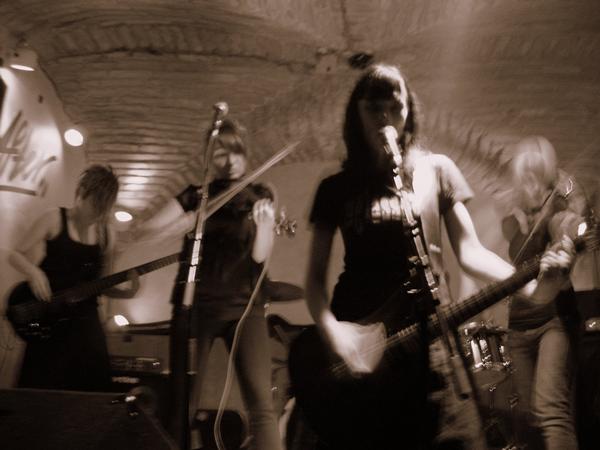
SubRosa are a band based in Salt Lake City, of all places, and they play the slower-paced, doom-laden metal that I’ve found myself gravitating to more than the hyper-aggressive thrash stuff. But what really makes the band unique, and what drew them to my attention, is that it’s a female-fronted group, with three different women that provide vocals. Even better, they actually sing instead of buying into this idea that all metal needs to have the same vocal style.

Two of the women also play violin, which adds an otherworldly element to the band’s sound, which is characterized by loud, sludgy riffs and slow tempos. There is a small amount of the growling vocals (usually relegated to the background), but for the most part the women sing in normal voices. The lyrics are focused on medieval, fantasy themes that remind me of Game of Thrones or Lord of the Rings, but the basic themes can be applied more universally. Overall, I find the band oddly reminiscent of the Breeders or the Raincoats, if one of those bands had randomly done a bunch of drugs, gotten obsessed with fantasy, and decided to record a metal album.

SubRosa is a textbook example of how women can really bring an effortlessly unique sound and perspective to a genre that sorely needs it. In the world of metal, just the fact that it’s women singing instead of a face-painted dude makes the band already sound completely different from their peers. Along with the violins, that turned their album No Help for the Mighty Ones into my go-to “heavy” album of 2011. It’s all the skull-crushing rock awesomeness that metal has always potentially provided, but without any of the annoying elements.

It also has a surprising amount of versatility. At times I find myself getting lost a bit in all the noise, almost like I do when listening to shoegaze. There’s even a medieval folky number, “House Carpenter,” at the end of the album, which is the kind of song that I doubt very many other metal bands could pull off.

I don’t know much about how SubRosa is received in the metal world, but they seem to be gaining popularity there, which is refreshing to see. As evidenced by a lame indie dork like me enjoying them, the band also has obvious crossover potential to indie listeners who are frustrated with the current state of music or just want to hear something different. I’m pretty sure no other band on earth sounds like SubRosa right now.

2011: A Retrospective and Look at the Future

As the year comes to an end, I thought it’d be fitting to take a look back at some of the events and debates that stood out for me in the last year.

The death of Trish Keenan

Most of the year-end “in memoriams” will be focused on Amy Winehouse, but no musician death affected me this year like Trish Keenan’s, who died on January 14th of pneumonia at age 42. Keenan fronted the UK dream pop group Broadcast, who, while consistently admired, never really got the level of popularity and acclaim that I felt they deserved. They quietly made some of the most beautiful and original music of the last decade, drawing from their 60’s inspirations like the United States of America and obscure foreign soundtracks to create something completely new.  At the center of their sometimes dark, psychedelic sounds was Trish and her warm vocals, which ensured that there was always a heart at the core of their music.

Trish’s death struck me because of how unfair it was for such an amazing singer to die of something like pneumonia, and because her death seemed to be met with relative shrugs or lack of acknowledgement from a lot of places. Considering her band was responsible for some of my favorite music ever, it was depressing to see it all get glanced over, or to see the band’s plays spike on last.fm before settling back down to normal just a couple weeks later. Her death didn’t just remind me of how life can seemingly end at any moment, but also the inherent sadness that comes with loving a band that nobody else seems to care about.

I named my blog after their debut album in tribute (and because it’s a great name for a music blog anyways), and I’ll continue to preach the greatness of Broadcast everywhere, even if I just get met with shrugs.

The year of “boring”

The biggest ongoing debate in music this year seemed to surround one word: “boring.” Is music today boring? What music is boring? What does boring actually mean in the context of music?

For me, this has been a subject of my attention for a couple years, when I noticed that local indie radio station The Current was playing a lot of music that bored the hell out of me (typically mopey folk). But the issue really came to a head this year when widely celebrated albums by the likes of Bon Iver, James Blake, and Fleet Foxes were branded as “boring” by many people (including me).

One of my favorite music writers, Steven Hyden, wrote an essay about the topic for The AV Club, where he criticized those that lazily use the word “boring” to describe music. I agree with some of what he says, but disagree with some of it as well. For one thing, I don’t think people that call music “boring” are wearing it with a badge of honor, but instead are simply disappointed at the direction music has taken.

But I agree that the word “boring” is dumb to use for music, which is why I’ve struggled a lot with this issue in 2011. Because, as much as I hate saying it, a lot of music this year really was boring. It’s not just that the sound of a lot of these artists is so low-key and passive, but there’s also the sense that it’s all been done before.  More than ever before, a lot of the most acclaimed music this year seemed to be stuck in the past, either fixated on reviving some trend (like the whole 80’s easy listening revival done by artists like Bon Iver and Destroyer that still completely baffles me) or recalling a specific sound and era. Even as I enjoyed some of the music by these revivalists, I still found it frustrating that so many seemed to be swimming in their own influences instead of making something we haven’t heard before.

Lame indie kids schooled by female veterans

While the whole boring music thing was happening, with most of it propagated by the same types of male artists that have always dominated indie music, an interesting trend for me emerged this year: A whole bunch of female artists returned from long layoffs and made some of the best, most original music of 2011.

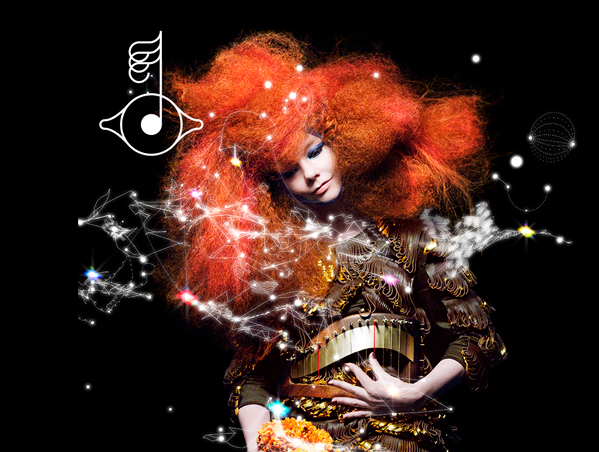
It started in February when PJ Harvey released Let England Shake, her first solo album since 2007’s White Chalk and likely her best in over a decade. Like all PJ Harvey albums, it was an original, literate piece of work, but it also benefited from a broader scope as her look at war and her homeland felt bold and provocative when so much music this year felt lifeless and limp.  Her contemporary in original female songwriting, Björk, also returned with her first new music since 2007 with the dazzling multimedia Biophilia project. Arguably Biophilia’s music didn’t live up to its ambitious iPad app packaging, gravity-based instruments, science classes, and all the other crazy stuff Björk was up to this year, but it reminded me of how refreshing it is to see an artist actually try something new and attempt to take music somewhere it hasn’t been before.

Elsewhere, all-female supergroup Wild Flag, which included Carrie Brownstein and Janet Weiss of the dearly departed Sleater-Kinney, released what I thought was the year’s best rock album in September. For Brownstein, who has spent the last few years blogging for NPR and appearing on Portlandia,  it was her first recorded music since that band’s 2005 album The Woods. Wild Flag also included Mary Timony who had been relatively under the radar since her mid-90’s work with Helium.  For members with such pedigrees, their debut album was wonderfully unpretentious, a celebration of the greatness of rock music coming at a time when we need it most.

The reclusive Kate Bush even came back with 50 Words for Snow, her first new music since 2005’s Aerial. With its seven songs clocking in at a whopping 65 minutes, Bush’s album was an ambitious work that was remarkably distant from any sort of current indie trends.  Its lengthy songs never wear out their welcome and showcase Bush’s knack for quirky storytelling. The song lengths became an issue for me as a couple songs I didn’t like as much took up about 1/3 of the album, but it also had some of my favorite songs of the year, especially the 13 minute “Misty” about Bush falling in love with a snowman and “Wild Man,” her ode to the yeti.

So what does it say about music that the most ambitious, thought-provoking music this year was made by females in their late 30-50’s?  I’m not really sure, but I do think today’s entitled indie youngsters could learn a thing or two from the artists that helped make indie music what it is.

(These veterans were joined by up-and-comers like St. Vincent, EMA, Tune-Yards, Eleanor Friedberger, etc.  Overall, I think this was probably the strongest year for female artists in a long time.)

Looking forward to 2012

When I started this blog because I was bored over the summer, I figured it would be a fun challenge for myself, but one that few other people would care about.  For the most part I think that’s still true, but I’ve had more activity than I was expecting on it and have already learned a lot (such as that putting pictures of Björk in your posts is a great way to get a lot of google images hits).  I’ve gained a lot of respect for websites I used to make fun of all the time now that I know how difficult it is to write about something so subjective.

For the next year, my goal is to listen and write fairly prolifically, with more focus on new music than I had in the past year.  Hopefully that will lead to more people reading and taking an interest in the blog, and who knows what happens from there.  I’m thankful to anyone who read or took an interest in my writing this last year, and hope you stay on board through 2012.  This blog wouldn’t be possible without you.  Well, actually it would be, but it’d be a lot sadder than it already is.