
Why Chelsea Wolfe Stands Out

Image courtesy of Bandcamp.

Chelsea Wolfe is one of those artists who has set a high bar for herself, and seven albums into her career it’s easy for media types to shrug off her music as “more of the same.” She Reaches Out to She Reaches Out to She arrives as her first solo release since 2019’s Birth of Violence, which is the longest break Wolfe has taken in her career, and that time gap has helped illustrate the stark difference in ability between her and the majority of artists who have been putting out music in the interim. While this album is not particularly new ground for Wolfe, it’s comparatively a revelation to hear an artist with actual personality and songwriting ability throw every part of herself into a project.

This isn’t just a case of absence makes the heart grow fonder: the visceral intensity and passion in Wolfe’s music is obvious, and it’s to the point that it makes it seem like other artists don’t even try. She Reaches Out to She Reaches Out to She is in the blend of electronics and doomy folk that has typified a lot of Wolfe’s work, and it’s always a dynamic sound with a lot of fascinating tensions. The beauty of Wolfe’s voice is often clashing with the industrial ugliness; sometimes there’s an “angel of doom” vibe as her vocals float above the chaos. And even when Wolfe’s songs are more quiet and calm, such as the trip-hoppy “Salt,” there’s a haunting surrealism on display that makes it feel unconventional.

Wolfe’s music is dark, and on the surface it’s easy to categorize her as being a typical depressing goth. This undersells the natural catharsis in the songs, and the themes of hope and pulling through difficult times that sneak into her work. Wolfe has said she wrote this album after achieving sobriety and a few songs like “Whispers in the Echo Chamber” literally deal with cutting ties with toxic elements in your life; others, like “Tunnel Lights,” are about overcoming hopeless-feeling situations and not giving up. She avoids clichés, dealing with these fairly well-worn themes through metaphor, performance, and poetry. There’s no pretending on this album: Wolfe’s authentic emotions are on full display, and at no point does it feel like she is putting on a show to try to seem cool or intelligent.

The best part of Wolfe’s music is that she writes actual songs with hooks. In this dark/doomy musical space, there are so many artists who just make unpleasant confrontational music with no real rhyme or reason to it — there’s an audience for that kind of thing, but I really value artists like this who can put the same feelings into their work while finding that balance between listenability and experimentation. In particular, “Dusk” and “Everything Turns Blue” are legitimately catchy, and that extra layer of craft lets these songs sink in more because it’s actually easy to listen to them over and over. And it adds to the feeling that there is logic and thought in everything; no moments are wasted and the songs properly build up and break down when the mood is right.

While that songwriting separates Wolfe from a lot of the darkness/doom crowd, it’s her intensity that puts her above a lot of the indie singer/songwriter fare currently. So much of it is coffee-house and self-consciously pretty; meanwhile, this is like plunging into an abyss and actually experiencing something that feels raw and human. She Reaches Out to She Reaches Out to She might be Wolfe’s strongest album, and it shows that she has few equals when it comes to making music that is heavy and emotionally impactful.

On “Sugarcoat,” Blushing Keeps the 90s Dream Alive

Image courtesy of Bandcamp.

Nostalgia is a disease. Constantly lingering in the past is the easiest way to never move forward, and assuming things used to be better often prevents people from enjoying greatness that is right in front of them. That being said: the 90s were pretty awesome, weren’t they? It was definitely the best decade, and I’m not just saying this because it was when I was a child who easily made friends and had no responsibilities.

This band, Blushing, really likes the 90s. They have a song on their new album, Sugarcoat, called “Tamogotchi.” Their sugary bubble-grunge sound is the product of a group of people who believe that the music industry and the world was a better place when Letters to Cleo was a prominent band (they may be right). There is an oddly endearing shamelessness to this whole endeavor — a lot of the presentation and style borders on feeling cynical in its Millennial pandering, but the songs also have a certain charm that makes them feel convincingly sincere.

On the surface, Sugarcoat is a straight-forward pop-rock album that isn’t particularly interested in probing deep into questions about the human condition. There’s not much to say about the individual songs except that there are a lot of bright, catchy melodies, and everything is executed sharply in terms of what the band is trying to do. If you enjoy relatively mindless, fun guitar pop, you will like this album. So instead of focusing on that, indulge me while I overanalyze the nostalgic aspect of this thing.

Because what is most interesting about Sugarcoat is how it (maybe intentionally) functions as a critique of itself. Nostalgia is primarily a result of how our minds remember all the good times and forget the bad ones, and that is also what is happening on this album in all facets from the sound to the packaging. It’s a constant sugar rush of bright colorful hooks and sweet vocals, and it’s all so on-the-nose (again, they called a song “Tamagotchi”) that a sense of darkness creeps in, as the band starts to resemble one of those groups that is a little too happy and you start to think they’re a cult.

What’s really being sold here is a kind of escapism, a retreat for some listeners into the carefree days of childhood. But it’s also a fantasy that at times feels hollow, because listening to this, you’d think nothing bad ever happened in the 90s and everyone was living in some kind of ultra-colorful music video. So there is this constant tension on the album between the pleasurable sounds and the slightly gross way it insists on looking backwards through the most rose-colored glasses imaginable. The funny thing is, this ambivalence is what ultimately makes me want to recommend the album: it has all these catchy songs, and — whether intended or not — there are elements in the music that raise these questions and make it surprisingly thought-provoking.

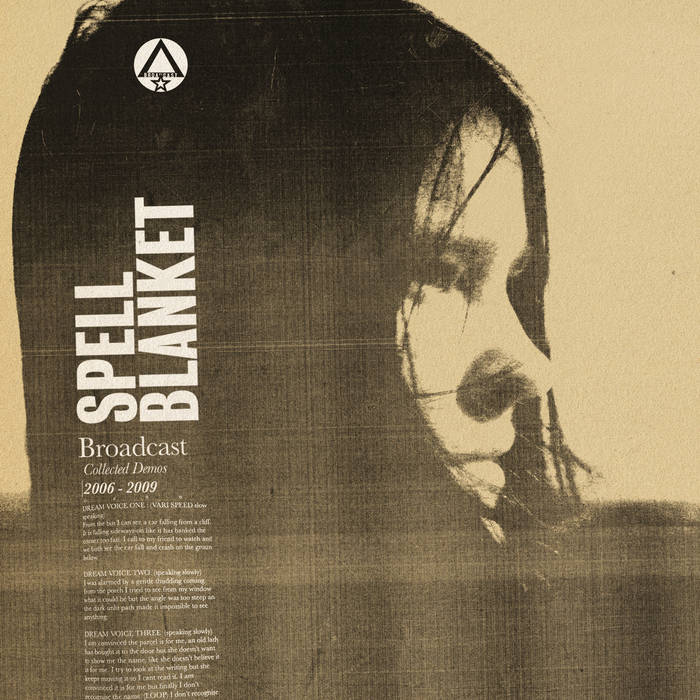
Broadcast’s “Spell Blanket” is a Poignant Reminder of Trish Keenan’s Talent

Image courtesy of Bandcamp.

Albums don’t get much more bittersweet than Spell Blanket, Broadcast’s recently released collection of demos that were recorded by late singer Trish Keenan from 2006–2009. For long-time obsessive fans like myself, there is joy in hearing Keenan’s voice again on unheard material and once again being inspired by her creativity. There is also an unmistakable sadness in the experience, hearing all these ideas and knowing how much great future music was taken from us when she passed. The more exciting and mesmerizing a song on Spell Blanket is, the more it hurts that it represents a fascinating path she was never able to fully explore.

Right away, the second song, “March of the Fleas,” stands out as a new direction for Broadcast, as Keenan’s haunting voice gets buried under cascades of heavy noise, like she’s being sucked into another dimension and is taking you with her. Then the song ends in two minutes and the reality sets in that there can never be a full album of songs like it, and this is it. Spell Blanket sprawls over 36 tracks — some seem nearly complete, others are more like snippets of possible directions — and most of them spark this sort of feeling. Between the quantity of material, the typical depth of Keenan’s ideas, and the emotional baggage involved in getting to hear any of this at all, it’s very difficult to process despite the inviting sounds.

James Cargill, Keenan’s bandmate/partner, had the unenviable task of assembling these demos, and he’s done it in a way that makes it feel like an actual artistic statement instead of a pile of tapes. The inherent minimalism in the demos suits Broadcast well: what makes their music brilliant and enduring is how he and Keenan could conjure complex feelings and ideas from very simple elements. Psychedelic music is often mistakenly thought to need a huge collection of instruments and effortful weirdness; Keenan could sing a bunch of one-syllable words over one synthesizer or some light strumming and transport listeners to different worlds.

“Follow the Light” was released as the first single off Spell Blanket, and it’s a quintessential Broadcast song. Keenan creates magic out of basically nothing: she sings some repetitive lyrics like “follow the light/look into the light” over a quiet synth part, yet the result is practically mind-blowing because so much is unsaid and left open to the listener’s interpretation. Broadcast’s music is always generous in this way. There is never any pretension, or an attempt to seem cool; the band wanted listeners to find new ideas in the music and explore, and Keenan was the perfect relatable voice to nudge them along.

That song also shows Keenan’s warmth as a presence, and a lot of what I find compelling in Broadcast’s music is the merging of psychedelia with humanity. That shines through in these sparser demos, which put the spotlight even more on Keenan’s natural gift for melody and her innate likability. “A Little Light” is a brief sing-songy burst of unadulterated uplift reminiscent of “Come On Let’s Go,” where Keenan tells someone to focus on the positives in a way that comes off as genuine and not cliche. Another happy song is “Petal Alphabet,” but its lyrics are more of an abstraction built around evocative phrases, in line with the work Broadcast was doing on later albums like Tender Buttons. Keenan shows vulnerability on the affecting “I Want to be Fine,” alternating spoken word mumbling and her delicate singing voice to sound fragile and even desperate. In some ways, the album in this form feels like a natural progression Broadcast could have made because of how much it emphasizes the human element that separated them from so many other psychedelic bands.

With no way of knowing what these demos would have eventually turned into, it’s better to accept what Spell Blanket is, which is a final testament to Keenan’s creativity, charm, and constant pursuit of new sounds and ideas. Even in its somewhat unpolished form, everything that made Broadcast a special band is present here, and it also includes some new ideas that show different lanes they could have eventually gone down. There’s something that sparks the imagination in all 36 of these songs, no matter how short they are, and some of the high points even benefit from the stripped-down non-performative demo feel. Unfortunately, the quality of Spell Blanket is also a kind of tragedy, as it clearly shows just how much Keenan had left to give.