Tragic Cases of Domineering Bro Disease

An obsession with female singers comes with many frustrations. Primarily, someone who loves female vocals has a much smaller pool to draw from when trying to find new bands, just due to the sheer disparity in numbers compared to male vocalists. This is already annoying enough, but it doesn’t end there: many bands have talented women but will waste their singing skills in lieu of a lame, questionably talented generic indie rock bro.

It’s a phenomenon I’ve decided to refer to as “Domineering Bro Disease,” because I couldn’t think of a better name. As far as I can tell, it’s exclusively a male phenomenon, and it’s plagued bands for decades, frequently worsening their creative output in the process. The main symptom of the disease is the result of the fragile male ego. It infects a guy, often a songwriter who helped to create the band, who – because he is a guy and guys have to be in control of everything – feels that the world needs to hear his uninteresting voice interpreting the songs rather than a talented female singer.

This is obviously frustrating for me, because I’m on the record as finding female vocals inherently more interesting than most male vocals. But in some cases, particularly at the more underground level, it hurt the band as well. A great female vocalist is an easy way to get your band spotted and to instantly stand out from the crowd on the local scene. Unfortunately, far too many dudes who think they’re the next Jeff Mangum have destroyed their chances by insisting that they handle the microphone.

Some bands with both genders have been able to find the right balance — Sonic Youth and My Bloody Valentine come to mind. But too frequently, the domineering bro asserts himself too strongly (part of why I love all-female bands is that there’s no guys around to screw everything up). Here are some of the many bands that could have used a bit more equality (or in some cases, inequality). Hopefully future bands will learn from their mistakes and work together to find a cure for this horrible, debilitating disease.

Jefferson Airplane

Like most people, the two songs I was first familiar with from Jefferson Airplane were “Somebody to Love” and “White Rabbit,” each of which were written and sung by Grace Slick, one of the most charismatic women in early rock. Both of these songs are purposeful and combined the band’s psychedelic aesthetic into a unique pop package. Excited to hear more, I downloaded the 1967 album Surrealistic Pillow that both songs are found on, only to find that the entire rest of the album was just pointless noodling with listless male vocals.

To this day, Jefferson Airplane drives me insane, because Slick was so clearly the biggest draw for the band. Her two songs were the chart hits from the album and also are the ones that frequently appear on “best songs of all time” lists. At a time when female-fronted rock was in short supply, they had an opportunity to be something truly unique and memorable, but it was squandered because the dudes in the band couldn’t put the pieces together and were too stubborn to step aside and let her rock. Instead, we’re left with “Somebody to Love,” “White Rabbit,” and a bunch of forgettable songs that non-hippies don’t listen to anymore.

The Pixies

Rock history is littered with domineering bros, but perhaps none were more domineering with less justification than Pixies frontman Black Francis. He was an undeniably talented songwriter who wrote some extremely influential songs, but his yelpy vocals often straddled the fine line between experimental and annoying. Meanwhile, bassist Kim Deal was blessed with one of the finest voices in rock music, a sweet but sinister coo that played perfectly with their noisy instrumentation. She showcased it on “Gigantic” from 1988’s Surfer Rosa, but after that album was mostly relugated to sidekick or background roles while Black Francis took charge. Thankfully Deal escaped the wrath of Francis, leaving the band to form The Breeders, a band that is much better than the Pixies regardless of what anyone tries to tell you.

Rilo Kiley

Rilo Kiley was founded by two child-actors-turned-musicians, Jenny Lewis and Blake Sennett, but it quickly became apparent to anyone with half a brain that Lewis was the star of the band. Her honest lyrics, sugary voice, and good looks quickly made her an indie darling. Despite that, Sennett doggedly inflicted his eighth-rate Elliott Smith voice on their audience, singing multiple songs on otherwise good albums like Take-Offs and Landings and The Execution of All Things. While Lewis’ songs were usually memorable and full of personality, Sennett’s invariably fell flat and quickly found their way onto my “instant skip” list.

In this case, it’s not that the male overshadowed the female, but that he felt the need to draw a shadow at all. Sennett was a fine guitarist who I’m sure was partially responsible for some of their best songs, but he should have been content to stand in the background playing guitar while riding Jenny’s coattails to stardom. Unsurprisingly, since the band broke up Lewis has had success as a solo artist and partnering with Jonathan Rice in Jenny and Johnny while Sennett now fronts the presumably crappy indie band The Elected.

Galaxie 500

Galaxie 500 made some of the most atmospheric and influential music of the late 80s and early 90s, using their love of The Velvet Underground to craft a slow-paced sound now known as “slowcore.” The band was fronted by guitarist Dean Wareham, who sang almost all of their songs. His nervous, jittery vocals suited the band’s songs about alienation and isolation quite well, but they still could have used more vocal turns by bassist Naomi Yang. The only two songs she sang over the band’s three albums were two of their best: On Fire‘s “Another Day” and This is our Music’s jawdropping cover of Yoko Ono’s “Listen, the Snow is Falling.”

Yang’s vocals suited the band’s hazy sound, and the band would have benefited from having another voice to mix up their songs a bit more. For a band that has occasionally been criticized for being too repetitive with their sound, Yang was an obvious answer that got overlooked.

The Dead Weather

A lot of the hype for supergroup The Dead Weather came from it being another Jack White side project. However, the band worked a lot better as a vehicle for The Kills’ Alison Mosshart, whose hellcat vocals finally got a chance to shine in a full-band atmosphere compared to the minimalism of her other group. The group’s best songs like “Gasoline” and “Hang You from the Heavens” are the ones where Mosshart leads the way, followed by the ones where both she and White play off of each other. The band’s worst songs are when White obligatorily takes the lead by himself. Mosshart’s vocals are passionate, full of attitude, and sound fresh while the overexposed White’s often sound like self-parody from his days with The White Stripes and usually just consist of him yelling attempts at catch phrases.
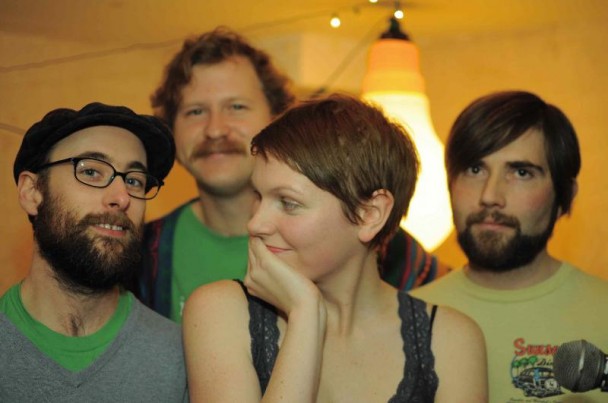
Allo Darlin’ – “Europe”

Listen on Soundcloud

In the last few years, it seems like the line between “indie” pop and just regular pop has been blurred. Bands like Sleigh Bells that started off in the blogosphere and on indie sites like Pitchfork have popped up in car commercials and on Saturday Night Live, stages that used to be reserved for only the most mainstream rock/pop artists. This year, artists like Grimes have made great pop albums that are influenced as much by Mariah Carey as they are by obscure 80s bands.

This isn’t necessarily a bad thing, but at the same time it seems like the initial spirit of indie pop — which used pop structures but also had more emotional, honest lyrics than mainstream pop — has sort of disappeared in lieu of an increasing obsession with pure hooks and adrenaline. I can like poppy music, but an argument I’ve had on Facebook and elsewhere is that the “pop” should never come at the expense of a true emotional connection with the music.

All this is why I’m madly in love with Allo Darlin’s new album Europe. The band, fronted by Australian Elizabeth Morris, is very much a throwback to earlier indie pop bands like Tiger Trap that expertly combined catchy pop melodies with genuine emotion. Europe is their second full-length, and it’s full of non-stop beautiful pop with jangly guitars, heartfelt singing, and honest, clever lyrics. While it sometimes sounds like other indie bands are auditioning for the next iPod commercial, the music of Allo Darlin’ feels refreshingly genuine. It’s not what anyone would call ambitious or daring, but part of its charm is its simplicity in an era of music that seems to be defined increasingly by gimmicks.

Musically, the band invites easy comparison to other sweet lyric-driven indie pop bands like Belle and Sebastian and Camera Obscura. The band’s arrangements are usually pretty straight-forward, with the typical guitar/bass/drums along with some occasional ukelele and strings. However, what really distinguishes the band is Morris, who is an extremely likable singer.

Morris’ songs are able to transcend the pejorative “twee” label due to her great voice and knack for storytelling. The lyrics on Europe often seem like real-life narratives, especially on “Tallulah,” which is the one song on the album that features just Morris and her ukelele. The word “ukelele” usually induces groans from me and others, but her lyrics elevate “Tallulah” and make it one of the best songs on the album, one that perfectly captures its bittersweet feelings on relationships and music. “I’m wondering if I’ve already heard all the songs that will mean something,” Morris sighs. “And I’m wondering if I’ve already met all the people that will mean something.”

Europe is peppered with little lyrical details that make the narratives feel real. Music is referenced frequently — standout track “The Letter” mentions the Silver Jews, while the aforementioned “Tallulah” is a reference to the album by the Go-Betweens (or possibly twee band Tallulah Gosh — both can be seen as influences on Allo Darlin’s music). As the title suggests, there are also a lot of geographical references as Morris seems to go on a tour throughout the continent on the album. She also returns to her homeland on stellar lead single “Capricornia,” which matches the album’s feelings of place and love with jangly, upbeat guitars.

On final track “My Sweet Friend,” Morris sings “a record is not just a record; records can hold memories.” Europe is a record that seems to hold a lot of them, and poignant moments like that are what makes it my favorite pop album of the year so far.

Favorite 2000s Albums: #2 – Sleater-Kinney – “The Woods”

Listen on Spotify

On One Beat, Sleater-Kinney showed signs of expanding their sound from their previous basic punk framework to something that could almost fill an arena. But nothing (and I mean nothing) could have prepared anyone for what would come on The Woods. After six albums and over ten years as a band, Sleater-Kinney completely reinvented themselves with a loud, gigantic rock album that sounds like the band’s take on Led Zeppelin and The Stooges. It was a massive risk, but one that paid off tremendously: The Woods is, for my money, the best rock album of the last 15 years or so.  In fact, it’s so ambitious, aggressive, and just plain awesome that it makes other attempts at rock albums from this time period look inconsequential and stupid.

The first thing most people note about The Woods is that it is very loud. Usually it comes to their attention after they start playing the raucous opener “The Fox” and nearly have their ear drums destroyed before they check to see if their speakers are broken.  The band hired Dave Fridmann, who had previously produced albums for The Flaming Lips and others, and he opted for the controversial production on The Woods that pushes every sound into the red. On the WTF With Marc Maron podcast, singer/guitarist Carrie Brownstein said that Fridmann wanted the listener to think something was wrong with their speakers at least once on every song, and he pretty much pulls that off by producing what might be the loudest album in the history of music this side of Raw Power.

The loudness isn’t just a gimmick though, as it helps bring Brownstein’s classic rock riffing and Janet Weiss’ drumming to unforeseen heights. Singer Corin Tucker also pushes her always abrasive voice further than it’s ever gone before, launching it to Robert Plant levels but still sounding like no one else in music. The distorted sound on The Woods functions as both an homage to and a subversion of 1970s cock rock.

Beyond the noise and distortion, what’s really striking about The Woods is how the band uses completely different song structures than they did in the past. Their previous albums had few songs more than 3 minutes long, but The Woods revels in its glorious excess, with guitar solos and breakdowns sending songs down unpredictable paths. “What’s Mine is Yours” starts out normally enough but gives way to a psychedelic section where Tucker chants against Brownstein’s squealing guitar and the thudding drums. But no song represents the new Sleater-Kinney more than “Let’s Call it Love”, an 11 minute (!) song about sex that is unabashedly dirty and features a nearly six minute guitar solo that careens all over the place. It transitions into another experiment, the improvised jam “Night Light” that closes the album (and the band’s career).

The album has a more accessible middle section that is expertly paced, beginning with the suicide fable “Jumpers” that combines poignant lyrics with the rest of the album’s guitar hero swagger. Things quiet down with the Brownstein-sung “Modern Girl” with its sly, satirical lyrics. On “Entertain” the band mocks the backwards-looking indie rock scene with some of their most cutting lyrics: “you can drown in mediocrity, it feels sublime” Brownstein sings on the bridge. It’s a cocky song, but with this album the band had earned the right to look down on others.

The new sound seems like it freed Sleater-Kinney from the conventions they were stuck in before, and it leads to maybe the most energized, vital music of their career.  Seven years later, The Woods still sounds more fresh and relevant than any rock album of today. I think it’s close to being unparalleled in its combination of craziness, ambition, and just pure rockage — The Woods is a colossal, badass hurricane of an album that leaves a sea of lame indie-rock dopes trembling in its wake.

It also ended up being the ultimate swan song for the band, as they went on indefinite hiatus after touring for the album. In retrospect it makes sense, given the go for broke mentality that The Woods exudes, and perhaps the band feeling burned out from music (and possibly each other) is what led to this album reaching such insane heights. The Woods caps off what I think is one of the greatest runs by a band in rock music history, and it does so with an incredibly loud bang.