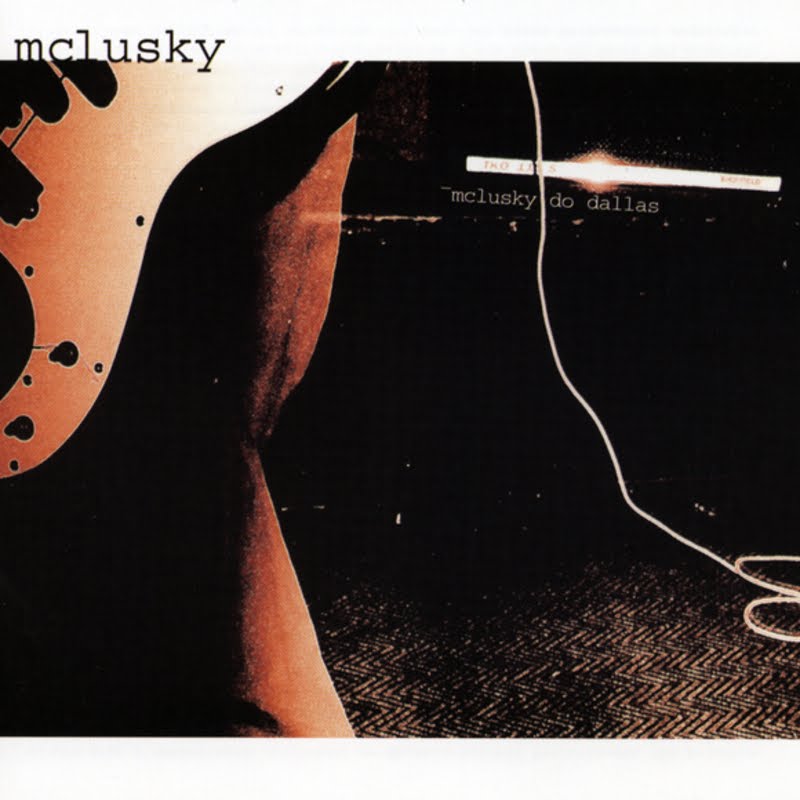
Favorite 2000s Albums – #10 – Mclusky – “Mclusky Do Dallas”


Listen on Spotify

In my last list, I looked at my favorite albums from the 90s, my favorite decade of music. Now, since I’m bored over spring break, I’ve decided to take on 2000-2009 (I refuse to call this decade “the oughts” or whatever horrible name people came up with for it). I wasn’t originally going to, because the 2000s is probably my least favorite of music despite the fact that I grew up during it. But I just can’t resist a good list, and even in the bucket of crap that was this decade there were a handful of great albums that I treasure, each of which provided something that was missing in the general lameness that I associate strongly with the period they came from. My hope with this list is to study why I love these albums and to see where things went horribly, horribly wrong in these ten years.

The most obvious way the 2000s sucked is the decline of rock music, or at least the kind of rock music I enjoy. At some point in this decade, rock music seemed to lose what made it great in the first place. Bands like Arcade Fire, Wilco, Modest Mouse, The National, and The Strokes reign supreme among “rock” bands on the top of most end-of-decade lists, but they all feel lacking compared to how alive and essential it felt in the 90s when outspoken, aggressive rock ruled the landscape . Most rock stopped being exciting and freeing like it was in the years before and started being stodgy and limp, lacking in personality and energy.

Which finally gets me to Mclusky, and their 2002 album Mclusky Do Dallas, a rock album that in many ways is the antithesis of the decade it came from. It’s loud, aggressive, and overflowing with charisma thanks to lead singer Andy Falkous and his howling vocals. It’s also hilarious, with some of the best misanthropic one liners ever committed to song. Mclusky rock at a higher volume and with more swagger than just about anyone else did at the time and sound like they’re having a party doing it.

Sonically, Mclusky don’t do anything too groundbreaking. Their dedication to abrasive noise (along with the album being engineered by Steve Albini) created obvious comparisons to 90s noise rock bands like The Jesus Lizard, while their darkly humorous lyrics and big hooks brought to mind the Pixies. Mclusky breaks out of the shadow of those bands through sheer force of personality, as Falkous and the band seem to have a whale of a time making an unholy racket and singing ridiculous non-sequitur lyrics like “All your friends are cunts. Your mother is a ballpoint pen thief.”

Mclusky Do Dallas is so relentlessly cacophonous that at times it feels like a satire of rock music one-upsmanship, with each song trying to top the previous one in terms of insanity. It’s most evident on album highlight “To Hell With Good Intentions”, where Falkous howls out increasingly silly, hyperbolic boasts about the band (“my band is better than your band, we’ve got more songs than a song convention”) with each punctuated by the band chanting “sing it!” as if urging other rock bands to come up to their level of badassery. Based on the output this decade provided, it seems that few bands took them up on the challenge.

The band’s songs never stray too far from their formula, but they find ways to mix it up to prevent the album from becoming too repetitive. “The World Loves Us and is Our Bitch” has a funky guitar lead while keeping up the band’s hyperbolic sense of humor, while lead track “Lightsabre Cocksucking Blues” has a call-and-response between Falkous and noisy guitar to go with its lyrics of paranoia and sex that are handled in typical Mclusky fashion. The closest the band comes to a ballad is “Fuck This Band”, which has lyrics that sound like what a parent whose kid listens to Mclusky might think about the band: “fuck this band because they swear too much, it’s an obvious ploy and irresponsible.”

Above all, Mclusky Do Dallas is a fun album, in a way that most acclaimed albums of the 2000s aren’t. It never takes itself too seriously, but also never has fun at the expense of providing the vital rush of excitement that only great rock music can provide. The fact that the music around them was so dull and serious made Mclusky’s back-to-basics rock feel that much more important. While I personally think rock declined in this decade and hasn’t really recovered, Mclusky Do Dallas shows that there is still always a home for it, even if it’s a smaller niche than it should be.

Deep Thoughts: Should Today’s Music Be Angrier?

We live in tumultuous times. The economy is in the crapper. Jobs are really hard to find. There’s also all the usual stuff, like politicians being politicians, anti-intellectualism running rampant, and other general persistent awfulness like the always reliable stupidity of people. If you’re in a band, you probably have even more to complain about: people are stealing your music via file sharing sites, there’s a massive amount of competition, and even if you break out of the local scene, chances are you’re much less successful than Nickelback and BrokenCYDE.

That’s why I find it odd that if you were to send someone from the future a bunch of indie music from the last year or two, and have them judge our time period based solely on that music, chances are they would think everything was super. They would hear a lot of nice synth sounds, some fluffy indie pop, and whatever Bon Iver is gargling about. They would detect very little of the unrest and uncertainty that I think is defining life among my age group in 2012.

In the past it seems like a good chunk of music could function as a historical record. When I think of the 60’s, I think of a lot of protest music along with all the hippie peace/love messages that appeared in more mainstream pop. I associate the late 70’s very strongly with the punk movement. When I think 90’s, I usually think of Nirvana, who were heralded as speaking for their generation in a unique way.

The thing I think all of these bands or movements have in common is that there was a purpose to the music. It needed to exist and wasn’t disposable. In each case, it was used to articulate something that wasn’t quite being articulated anywhere else, and I think that’s what caused each example to strike a nerve with the general population. The music is still remembered and listened to today because something about it resonated deeply with people beyond a surface level — it wasn’t just “music”, it was almost more like a way of life for the listeners.

When I look at indie music today, it’s hard to find any artist with a similar effect on its audience. Perhaps the band that has the most unified support is Arcade Fire, who have released three highly acclaimed albums now and are beginning to achieve some mainstream success to go with it.  But the problem with Arcade Fire for me is one that plagues most of the other highly acclaimed bands of the last decade or so: there’s no edge to their music, no real purpose behind anything they do other than just making stuff that sounds good. If I had never heard an Arcade Fire song, my life would basically be the exact same as it is now.

The emotion that I think Arcade Fire and so many of the other acclaimed recent bands (Animal Collective, Modest Mouse, you name it) are missing is anger. For me at least, anger is one of the most unifying human emotions there is. When I love the same thing as someone, that’s cool, but I feel a true connection to someone when we both really hate something, especially if it’s something that most other people like. And I think most music that has stood the test of time has had that pissed-off element to it: a lot of 60’s music, early punk and Nirvana were rooted in anger at the musical (and political) status quo. The reason that they’ve all stood the test of time is that they stood for something; they voiced a certain displeasure at the way things were and frustrated people agreed with them.

One of my all-time favorite songs is “Entertain” by Sleater-Kinney, off their 2005 album The Woods. The reason I love it so much (beyond the awesome drumming) is that it’s just so angry. Carrie Brownstein’s manic vocal delivery and lyrics sell the song, which completely rips apart the backwards-looking indie scenesters of the day:

You come around looking 1984
You’re such a bore, 1984
Nostalgia, you’re using it like a whore
It’s better than before
You come around sounding 1972
You did nothing new with 1972
Where is the fuck you?
Where’s the black and blue

“Entertain” admittedly goes after rather low-hanging fruit, but I don’t care because it’s so dead-on in its criticism of many bands of that time and this time. It made me think “THANK YOU” that someone finally said what I had been wanting to see said for so long. And since then, “Entertain” has sort of become my musical M.O.

A lot of my favorite rock music has that element of anger in it somewhere: Sleater-Kinney, early PJ Harvey, Helium, Bikini Kill (or any other riot grrrl band), Fugazi, Sonic Youth, Nirvana, Big Black, The Fall, etc. It’s something that I think the greatest rock music has, and conspicuously none of these bands have been active in the last five years (except for PJ Harvey, who did make a fairly angry, indignant album with Let England Shake last year).

At some point, I’m confident that this kind of great rock music will come back, because these things tend to go in cycles. So far this year, there’s been a slight resurgence thanks to Cloud Nothings’ Attack On Memory, which I didn’t think was an amazing album but it at least attempted to shake up the scene a little bit. It gave me some hope that this phenomenon is being seen by people who can actually play music and want things to be different. Right now, I think indie rock needs a savior, a truly great rock band that can save me from artsy pop, toothless faux-rock, and beardy folk.

Tiger Trap

There’s few words in the English vernacular that I hate more than “twee.” If you’re not familiar, according to the top result on Urban Dictionary, twee means “something that is sweet, almost to the point of being sickeningly so.” In music, it’s been used to describe fey, cutesy pop bands that play non-threatening, inoffensive music for lame sweater-wearing indie kids to sip tea to. I have a hard time explaining my hatred for the word, but something about the way it sounds and the people it’s used to describe drives me nuts.

Of course, this is all leading into me liking one of the bands that is synonymous with twee pop — the short-lived all-female foursome Tiger Trap, who were on the K Records label that housed most of the top twee bands. Named for a Calvin and Hobbes cartoon, the group played energetic, sugary sweet noise-pop songs that are unabashedly girly, almost always about liking boys and sung in an almost child-like way by frontwoman Rose Melberg.  They only were in existence for about a year, with most of their songs compiled on the 1993 release Tiger Trap.

Tiger Trap has made me think a lot over the past few months, because they’re quite different from music I typically like and am trumpeting on the blog. I rarely enjoy pure pop and I like music to have an element of danger or risk to it — yet I found myself loving Tiger Trap, who make music that is about as threatening as a kitten. They were somehow able to transcend all of my twee hate and pop music preconceptions.

Eventually, I came to a realization: A band can take a lot of risks and actually be quite bold without necessarily appearing that way on the surface. Tiger Trap was released in 1993, which I consider an incredibly strong year for rock music, particularly if it involved women trying to balance the male-dominated field: PJ Harvey released one of my favorite rock albums ever with Rid of Me, the Breeders released Last Splash, Liz Phair released Exile in Guyville. All the while, Riot Grrrl was beginning to enter the mainstream consciousness. Yet, in that same year, Tiger Trap released this collection of disarmingly innocent pop songs.

I guess what I’m getting at is that, despite how innocuous they seem on the surface, Tiger Trap were a pretty adventurous, gutsy band. They were, dare I say it, punk. There’s something very rebellious to me about them releasing such a non-rebellious collection of songs at perhaps the peak of feminist politics in rock music. In its own way, it’s a statement that they could make whatever music they want, regardless of what the current trend was.

All that helps give Tiger Trap a timeless, nostalgic feel that might be why it evokes more meaning to me than typical pop music. It doesn’t seem attached to specific eras of music and has aged superbly as a result. It makes me think of being a kid on the playground, of summer days playing outside, and a bunch of other things that I don’t really experience anymore and are rarely communicated in music. While listening to them, I can practically hear the ice cream truck come jingling by and remember my excitement as I ran out to buy a bomb pop without putting my shoes on.

The songs are also obviously a big part of Tiger Trap’s charm. It’s brief, with 12 songs clocking in at a scant 30 minutes, but I consider Tiger Trap to be a classic guitar pop album, one that can be seen as a direct influence on indie bands of today like Best Coast that traffic in similarly sunny, carefree territory. Almost every song has a memorable guitar riff and hook, which combined with the child-like lyrics and vocals make the band impossible to resist, even for a malcontent, soulless bastard like myself. Tiger Trap has the power to turn even the most jaded pop-music skeptic into a believer.