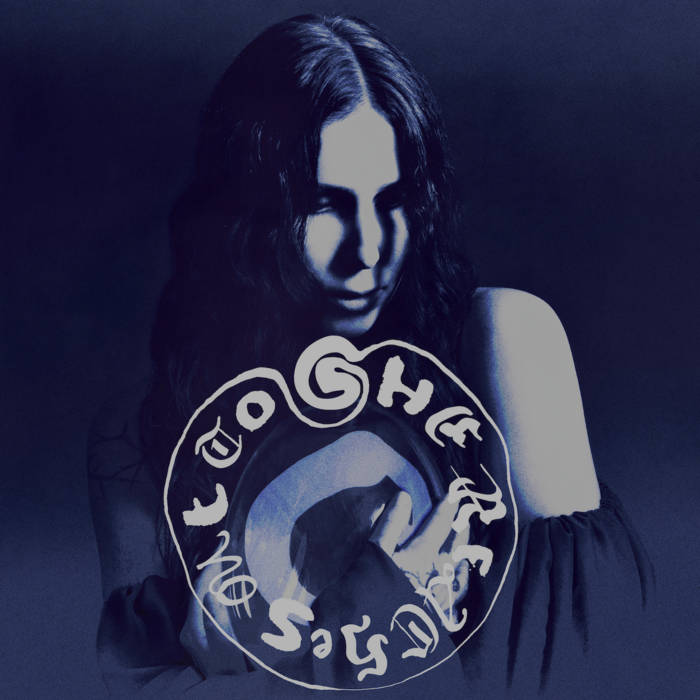
Why Chelsea Wolfe Stands Out

Image courtesy of Bandcamp.

Chelsea Wolfe is one of those artists who has set a high bar for herself, and seven albums into her career it’s easy for media types to shrug off her music as “more of the same.” She Reaches Out to She Reaches Out to She arrives as her first solo release since 2019’s Birth of Violence, which is the longest break Wolfe has taken in her career, and that time gap has helped illustrate the stark difference in ability between her and the majority of artists who have been putting out music in the interim. While this album is not particularly new ground for Wolfe, it’s comparatively a revelation to hear an artist with actual personality and songwriting ability throw every part of herself into a project.

This isn’t just a case of absence makes the heart grow fonder: the visceral intensity and passion in Wolfe’s music is obvious, and it’s to the point that it makes it seem like other artists don’t even try. She Reaches Out to She Reaches Out to She is in the blend of electronics and doomy folk that has typified a lot of Wolfe’s work, and it’s always a dynamic sound with a lot of fascinating tensions. The beauty of Wolfe’s voice is often clashing with the industrial ugliness; sometimes there’s an “angel of doom” vibe as her vocals float above the chaos. And even when Wolfe’s songs are more quiet and calm, such as the trip-hoppy “Salt,” there’s a haunting surrealism on display that makes it feel unconventional.

Wolfe’s music is dark, and on the surface it’s easy to categorize her as being a typical depressing goth. This undersells the natural catharsis in the songs, and the themes of hope and pulling through difficult times that sneak into her work. Wolfe has said she wrote this album after achieving sobriety and a few songs like “Whispers in the Echo Chamber” literally deal with cutting ties with toxic elements in your life; others, like “Tunnel Lights,” are about overcoming hopeless-feeling situations and not giving up. She avoids clichés, dealing with these fairly well-worn themes through metaphor, performance, and poetry. There’s no pretending on this album: Wolfe’s authentic emotions are on full display, and at no point does it feel like she is putting on a show to try to seem cool or intelligent.

The best part of Wolfe’s music is that she writes actual songs with hooks. In this dark/doomy musical space, there are so many artists who just make unpleasant confrontational music with no real rhyme or reason to it — there’s an audience for that kind of thing, but I really value artists like this who can put the same feelings into their work while finding that balance between listenability and experimentation. In particular, “Dusk” and “Everything Turns Blue” are legitimately catchy, and that extra layer of craft lets these songs sink in more because it’s actually easy to listen to them over and over. And it adds to the feeling that there is logic and thought in everything; no moments are wasted and the songs properly build up and break down when the mood is right.

While that songwriting separates Wolfe from a lot of the darkness/doom crowd, it’s her intensity that puts her above a lot of the indie singer/songwriter fare currently. So much of it is coffee-house and self-consciously pretty; meanwhile, this is like plunging into an abyss and actually experiencing something that feels raw and human. She Reaches Out to She Reaches Out to She might be Wolfe’s strongest album, and it shows that she has few equals when it comes to making music that is heavy and emotionally impactful.

I Like These New Songs (Pt. 1)

I had a music slump earlier in the year and didn’t feel like writing, so I’m going to catch up on all the stuff I’ve been listening to with a couple quick posts.

The Weather Station – “Robber”

One of my lifelong hobbies is making fun of folk music, since I find almost all of it boring and it’s hard not to poke at the reverence its’s often held in by the snobbier types of listeners. The Weather Station’s Ignorance is the folkiest album I’ve liked in a long time because of songs like “Robber”: this is musically interesting, with creative rhythms, a dense saxophone-heavy arrangement, and lyrics that are thought-provoking instead of the usual woe-is-me stuff that often passes for depth because it’s sad (which equals good, as we all know). Tamara Lindeman’s vocals are the finishing touch — I think they channel Sarah McLachlan, adding to my ongoing thesis that she is a quietly influential figure in acclaimed indie music right now.

Cassandra Jenkins – “Hard Drive”

Along with “Robber,” Cassandra Jenkins’ “Hard Drive” is part of why 2021 is the year of women in their late 30s making saxophone-heavy folk. This song is kind of the oddball on her album, An Overview on Phenomenal Nature, as it goes with a primarily spoken-word delivery that plays over the saxophone and a repeating piano part, eventually growing into a stirring crescendo over the course of five minutes. The understated vocals allow the lyrics to shine; there is maximum wordplay from the phrase “hard drive” that refers both to the mind and her experiences of literally having a hard time driving (relatable).

Lia Ices – “Earthy”

Lia Ices’ Family Album rounds out this trio of folky albums I’ve been into, and I might actually like it the most of them all even though it slid under the radar with a zero hype January release. After a move to California, Ices went for the classic Laurel Canyon sound, adding a slight tinge of psychedelia (the perfect amount, really) to her piano-heavy arrangements in part thanks to production from the late JR White of Girls. The lyrics are often about her experiences as a new mother, as the title suggests, which is part of what gives this album a sense of warmth and optimism that is refreshing in this field. Given how successful Weyes Blood was with a similar sound a couple years ago, I’m a little disappointed that this album hasn’t reached more listeners.

Chelsea Wolfe – “Diana”

I haven’t been a participant in society’s superhero obsession and largely consider the DC and Marvel movies to be mindless military propaganda that is used to make hordes of viewers obedient slaves of the U.S. government, the Walt Disney Corporation, and Warner Brothers. At risk of sounding like a snob, I believe not enjoying these films makes me superior to others in matters of taste and intellect. That said, Chelsea Wolfe’s “Diana” is inspired by Wonder Woman as part of a DC Comics metal collaboration, and it actually makes the character sound interesting compared to the celebrity cosplay version on screen. I like Wolfe in this more aggressive mode, and she brings her usual tension between light and darkness here, presenting Wonder Woman as a more conflicted and ambiguous personality.

Cold Beat – “See You Again”

I feel like I’ve said all I can about Cold Beat over the years. They’re the best band and “See You Again” is the first single from another new album from them that will surely be great. It’s a slower, shimmering ballad, similar to “In Motion” from Chaos By Invitation, but this time Hannah Lew’s lyrics are the most simple and easily relatable they’ve ever been, a sad but hopeful reflection on drifting away from people that rings particularly true in COVID times.

Here’s Some New Music I Like

Some music releases I’ve been enjoying lately:

Mrs. Piss – Self-Surgery

This is a bite-sized side project of Chelsea Wolfe, who is the reigning queen of hyper-intense, melodramatic rock music. While Wolfe has historically been known for slower, dynamically rich songs, on Self-Surgery she shows a different side of herself by amping up the aggression and tempo with help from drummer Jess Gowrie. It serves as a useful companion to her last solo album, Birth of Violence, which showed the other side of her artistry with a calmer, post-apocalyptic vibe.

Given the band name and imagery, which hints at body horror and trashiness, I actually expected this album to be more transgressive and discomforting than it is. Even when Wolfe is trying her hardest to make her music ugly, she can’t help but let some beauty slip out, and songs like “Downer Surrounded by Uppers” have catchy melodies even while taking on more of a hardcore punk structure. The lyrics of that song are in line with the rest of this album, which is the sound of introverts and weirdos unleashing their inner fury at the world. It’s nice to hear some music that actually reflects the rage that many of us are experiencing right now, and it does it without devolving into performative corniness.

Annie – “American Cars”

Grizzled indie pop veterans will recognize Annie, who turned many jaded indie rock snobs into begrudging pop fans with 2004’s Anniemal and 2009’s Don’t Stop. Those albums are classics in the “pop for music nerds” genre that would later be owned by artists like Carly Rae Jepsen, and now the Norwegian artist is preparing her first full-length album in 11 (!) years. “American Cars” is the first single and shows she still has a mastery of the craft and an ability to add deeper, subtler feeling into her tunes that eludes most of the pop artists you hear on the radio.

Noveller –Arrow

Sarah Lipstate serves as the guitarist for Iggy Pop and also records under the name Noveller. Her new album, Arrow, is a hypnotizing collection of ambient songs that form their own cinematic desert landscapes out of her electric guitar. I often struggle with ambient music because it either feels show-offy or impenetrable; Lipstate’s compositions have thought in every note, and she judiciously uses her considerable skill to make an album that is cohesive and vast. It’s surprisingly thrilling to listen to.

Dummy – Dummy EP

The first release from this band out of Los Angeles is the kind of noisy, motorik psychedelic sound that I’m constantly obsessed with. Over only five tracks, the band shows a lot of different sides of themselves on this promising debut. “Slacker Mask” is one of the bigger jams of the year and recalls mid-90s Stereolab pretty well, as does the opener “Angel’s Gear.” “Touch the Chimes” is a long, meditative droning track at the end that shows the band leaning more into folk. Nothing here is mind-blowingly new, but it’s executed so well that it becomes hard to deny, similar to the Peel Dream Magazine album from earlier in the year.

Bec Plexus – Sticklip

Sticklip is an increasingly rare treat: an album that doesn’t really sound like anything else. Plexus’ glitchy electronic sound and chatty, sometimes spoken vocals are most reminiscent of Laurie Anderson, but the themes and her personality are different enough that this album feels like its in its own world. She has presented this album as a “digital confession booth” with friends apparently writing lyrics about their deepest, darkest feelings, though the lyrics are more abstractions than anything that actually sounds like a straight-forward confession. “Mirror Image” is the major highlight; it’s a completely distinct, avant-garde song that confronts the self in a way that feels like a sci-fi movie.