Broadcast’s “Spell Blanket” is a Poignant Reminder of Trish Keenan’s Talent

Image courtesy of Bandcamp.

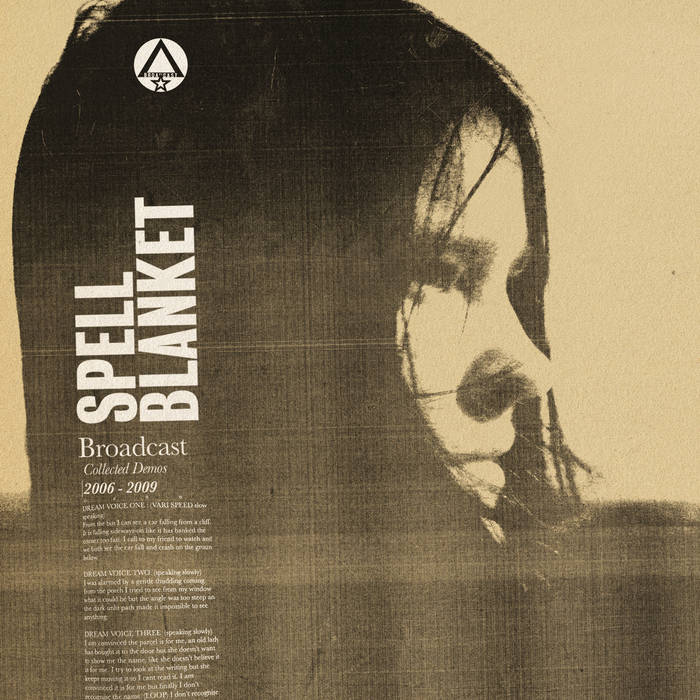
Albums don’t get much more bittersweet than Spell Blanket, Broadcast’s recently released collection of demos that were recorded by late singer Trish Keenan from 2006–2009. For long-time obsessive fans like myself, there is joy in hearing Keenan’s voice again on unheard material and once again being inspired by her creativity. There is also an unmistakable sadness in the experience, hearing all these ideas and knowing how much great future music was taken from us when she passed. The more exciting and mesmerizing a song on Spell Blanket is, the more it hurts that it represents a fascinating path she was never able to fully explore.

Right away, the second song, “March of the Fleas,” stands out as a new direction for Broadcast, as Keenan’s haunting voice gets buried under cascades of heavy noise, like she’s being sucked into another dimension and is taking you with her. Then the song ends in two minutes and the reality sets in that there can never be a full album of songs like it, and this is it. Spell Blanket sprawls over 36 tracks — some seem nearly complete, others are more like snippets of possible directions — and most of them spark this sort of feeling. Between the quantity of material, the typical depth of Keenan’s ideas, and the emotional baggage involved in getting to hear any of this at all, it’s very difficult to process despite the inviting sounds.

James Cargill, Keenan’s bandmate/partner, had the unenviable task of assembling these demos, and he’s done it in a way that makes it feel like an actual artistic statement instead of a pile of tapes. The inherent minimalism in the demos suits Broadcast well: what makes their music brilliant and enduring is how he and Keenan could conjure complex feelings and ideas from very simple elements. Psychedelic music is often mistakenly thought to need a huge collection of instruments and effortful weirdness; Keenan could sing a bunch of one-syllable words over one synthesizer or some light strumming and transport listeners to different worlds.

“Follow the Light” was released as the first single off Spell Blanket, and it’s a quintessential Broadcast song. Keenan creates magic out of basically nothing: she sings some repetitive lyrics like “follow the light/look into the light” over a quiet synth part, yet the result is practically mind-blowing because so much is unsaid and left open to the listener’s interpretation. Broadcast’s music is always generous in this way. There is never any pretension, or an attempt to seem cool; the band wanted listeners to find new ideas in the music and explore, and Keenan was the perfect relatable voice to nudge them along.

That song also shows Keenan’s warmth as a presence, and a lot of what I find compelling in Broadcast’s music is the merging of psychedelia with humanity. That shines through in these sparser demos, which put the spotlight even more on Keenan’s natural gift for melody and her innate likability. “A Little Light” is a brief sing-songy burst of unadulterated uplift reminiscent of “Come On Let’s Go,” where Keenan tells someone to focus on the positives in a way that comes off as genuine and not cliche. Another happy song is “Petal Alphabet,” but its lyrics are more of an abstraction built around evocative phrases, in line with the work Broadcast was doing on later albums like Tender Buttons. Keenan shows vulnerability on the affecting “I Want to be Fine,” alternating spoken word mumbling and her delicate singing voice to sound fragile and even desperate. In some ways, the album in this form feels like a natural progression Broadcast could have made because of how much it emphasizes the human element that separated them from so many other psychedelic bands.

With no way of knowing what these demos would have eventually turned into, it’s better to accept what Spell Blanket is, which is a final testament to Keenan’s creativity, charm, and constant pursuit of new sounds and ideas. Even in its somewhat unpolished form, everything that made Broadcast a special band is present here, and it also includes some new ideas that show different lanes they could have eventually gone down. There’s something that sparks the imagination in all 36 of these songs, no matter how short they are, and some of the high points even benefit from the stripped-down non-performative demo feel. Unfortunately, the quality of Spell Blanket is also a kind of tragedy, as it clearly shows just how much Keenan had left to give.

The Legacy of Trish Keenan: Until Then

If you think nothing is yours
And if I think everything belongs to me
How wrong I’ll be
None of us have anything
There’s a place I have never explored
Another world we have yet to conquer
And until then none of us have anything

Those words, from “Until Then” off The Noise Made By People, have stuck with me more than any other lyrics in music. In typical Broadcast fashion, they’re simple, and sung unpretentiously, yet lend themselves to unlimited interpretation. They’re paired with creaky, heaving synths that near the end swell into a massive buzzing crescendo that was probably the loudest the typically quiet band ever sounded on record. Then suddenly, it stops, and reverts to silence — a beautiful sound is extinguished.

Trish Keenan died in January, 2011, after contracting swine flu while on tour in Australia. She was only 42 years old. At the time, I was living in a dorm room during J-Term and I woke up to the news from Pitchfork and couldn’t believe it. Again, I wish I had a better story, like I cried or went into a fascinating nihilistic tailspin. But all I did was turn on her music, and I listened to Broadcast’s whole discography all the way through that day, mostly through my crummy laptop speakers, I think out of hope it would somehow echo through the building and people would hear it and discover it.

Her death meant the context of the songs changed permanently, and because they tended towards being ambiguous, some of them, like “Until Then,” jumped out more than they had for me previously. Now I think Keenan’s lyrics describe an afterlife or possibly a parallel universe — a psychedelic kind of world separate from this one where I like to imagine her continuing to explore and find the truth. Normally, I don’t buy into such concepts, but Keenan’s greatest gift was her ability to make you believe, to provide thoughtfulness and hope in the face of cynicism and darkness.

In the wake of her death, there was a gratifying outpouring of appreciation for Keenan, including from a range of celebrities, and a lot of discussion about a band that was rarely the subject of online discourse. But then everyone moved on, as they do, and now I wonder if people under a certain age have any idea who this band is (even I’m probably on the very young side of Broadcast fans). It’s also become abundantly clear that bands like Broadcast aren’t a priority for the music press, which has become a monoculture that is obsessed with what is new and hip, not necessarily what will last. If music writing isn’t about preserving bands like this, that offer so much, then what exactly is being accomplished?

Ultimately, the responsibility now lies on fans of the band to pass this music down, almost like an oral history. One of the more satisfying experiences I had recently (back when I thought I would finish this series in a couple months) was attending a Keenan tribute show at Moon Palace Books, which featured local bands covering her songs. The entire room was cramped with people talking about Keenan, celebrating her art, and every singer did their best to interpret her songs, even though she had something intangible that will never be replicated. That was when I saw the impact of her music in more real terms: while Keenan was not a mega-celebrity, and isn’t a constant source of discussion now, there was this entire group of people inspired and moved by her music, many of whom were playing in their own bands. That’s the legacy I like artists to strive for rather than winning awards or generating buzz.

Keenan was able to inspire that kind of devotion while being soft-spoken and unassuming. She let her music do most of the talking and made songs that gave listeners the freedom to join her while she explored all of these different worlds. As a relative novice to music when I discovered the band, she was the artist who inspired me the most, who showed me the joy that could be had in hearing music that aimed to be intelligent, generous, and personal rather than just profitable. And she made me want to pay that forward, to try to convince people that there are amazing obscure artists out there who can change your life and are just waiting to be discovered.

The Legacy of Trish Keenan: All Circles Vanish

There’s a reason beyond my own laziness that this project has hit a snag: Broadcast and the Focus Group Investigate Witch Cults of the Radio Age (henceforth referred to in this piece as “this album”) is a uniquely difficult album that resists most typical attempts at interpretation and analysis. I’ve never been sure if I really understood everything it was trying to do, or if I was even meant to. Through the years, my opinions on it have vacillated from “this isn’t even a true Broadcast album” all the way to “this is the most Broadcast album of all the Broadcast albums.”

Released four years after Tender Buttons, this album was a collaboration with The Focus Group (Julian House), who had collaborated on the band’s artwork in the past and had an obsession with digging through the past and repurposing old sounds into little bits of psychedelia. He drove enough of this project to receive equal billing, which has led to a weird modern frustration — this album doesn’t appear on Broadcast’s Spotify page, but is listed under “Broadcast and the Focus Group,” making it easy to miss for new fans discovering the group and adding to the perception that this was more of a side project and not one of the band’s “true” albums. This was also the only Broadcast album (other than 2011’s posthumous Berberian Sound Studio, which I don’t really think of as one of their “canon” albums) released while I was an active fan, but I mostly remember not initially liking it because it was so different, and I might have went about five years before I even listened to it again.

Years later, the album has grown on me a lot, but I still think there was some validity to my initial reaction — that the appeal of Broadcast was how they made pop songs that were simple, but contained layers of weirdness and psychedelia underneath that you could gradually unfold. This album removes a lot of that satisfying subtlety and replaces it with very overt strangeness — this is more of a shout than a whisper like “Echo’s Answer.” The litany of samples and sounds in every song are jarring, and I’ve never been able to tell how much of it was original material and how much was scrapbooked together from old horror movies and the Radiophonic Workshop. The only traditional song on this album comes at the beginning: “The Be Colony” isn’t too far off from classic Broadcast and is one of my favorites by the group.

After that, this album is pretty much just a trip, and it takes a lot of the more subtle psychedelic aspects in Broadcast’s music and amplifies them to the fullest. The entire Alice in Wonderland construction of their songs comes very heavily to the forefront here, with Keenan’s ghostly innocent voice surrounded by all sorts of obscure sounds. It is never unpleasant to listen to because of the band’s gift for gentle melodies, but at times it is frustrating because of its patchwork structure. Parts like the haunting beginning of “Royal Chant” that I want to go on forever drift away in about 40 seconds, replaced by the next oddball sound they dug up. That makes it difficult to latch onto any sort of central meaning or purpose to the songs at times.

I’m normally weary of just accepting musician’s explanations of what their music is at face value (I prefer deciding for myself), but in this case, Keenan had a good summary:

I’d like people to enjoy the album as a Hammer horror dream collage where Broadcast play the role of the guest band at the mansion drug party by night, and a science worshipping Eloi possessed by 3/4 rhythms by day, all headed by the Focus Group leader who lays down sonic laws that break through the corrective systems of timing and keys.

That provides a bit of a road map to the album, but it’s still one that, at least for me, is more prickly and hard to love than all of their other efforts. One thing I think defines Broadcast’s music is a spirit of generosity — their songs had a warmth to them through sound, but also allowed listeners freedom to slowly find the truth and meaning hinted at in their songs. This is the only music they made that has a hint of self-indulgence to it, a sense that maybe it was more fun for them to make than it was to listen to.

Despite these reservations, there are times I listen to this album and convince myself that it was actually the purest representation of Broadcast. It captures many of the band’s obsessions in their purest form: the use of old sounds to create something new and weird, the desire to challenge listeners, and the idea of using psychedelic music as a door into a different way of thinking. It’s radically different from everything they did previously, yet also kind of the same, and I believe the band set out to make an album that was effective in part because it was disorienting, confusing, and not easily interpreted or analyzed. Broadcast loved making puzzles, and this is one I still haven’t figured out — that might make it the most effective of them all.