Favorite 90s Albums: #2 – My Bloody Valentine – “Loveless”

One of the elements of music I find most interesting is the idea of building on the past, the way that bands take in certain influences and hallmark albums and try to build on them or improve them in some way.  But a recurring theme in this series has been the idea that the very best albums simply can’t be replicated.  Albums like In the Aeroplane over the Sea, Homogenic, and pretty much all the others are too much a product of the genius of their creators and the specific time and place that they were made.  They’re also such perfect distillations of the genre or sound that they’re trying to accomplish that there’s no point in even trying.

Perhaps no album exemplifies that idea more than My Bloody Valentine’s 1991 masterpiece Loveless.  By pretty much any measure, this is one of the most influential albums there is in indie music.  In fact, it’s one of those albums that seems to be a building block of what “indie music” even is, given how vague and all-encompassing the term is.  Bands have tried to replicate it in the 20 years since its first release and none have come even remotely close. The most successful have been ones that merely borrowed bits and pieces of Loveless instead of trying to capture its entire aesthetic.

Much of that is due to its creator, Kevin Shields.  Shields had the idea for Loveless in his head and paired it with a relentless commitment to bring it to fruition.  As a result, the recording sessions for Loveless have become somewhat legendary, as Shields spent two years cycling through various engineers, meticulously recording the sound of the album in various studios, and nearly bankrupting Creation Records (who promptly released My Bloody Valentine from their label following the release of the album).

Of course, all of the craziness by Shields is what makes Loveless what it is.  Despite having few coherent lyrics, it’s a uniquely powerful album, one that is difficult to explain and simply has to be experienced.  It finds beauty in the previously ugly realm of noise in music and for the most part was unlike anything that came before it.  And its songs also show surprising pop craftsmanship but are also nearly impossible to pinpoint due to the abstract sounds and lyrics.

One thing I sort of miss about the current state of music is that feeling of throwing an album into a record or CD player and just letting it spin, without really knowing what you’re about to hear.  That sense of nostalgia for an era that I didn’t even really experience that much comes up a lot when listening to Loveless, mostly because of the opening track “Only Shallow.”  Has there been a better two seconds in music than the beginning of this song?  It starts out with a drum beat that sounds fairly normal, but a second later the walls of guitar come in and it’s unlike anything I’ve heard before.

Loveless not only perfects its aesthetic (primarily known as “shoegazing”, another unnecessary musical genre term that I could live without), but also takes it in many different areasThere’s more traditional rock songs (“Only Shallow), but also lush, dreamy pieces featuring Bilinda Butcher’s vocals (“Loomer”) and more abstract, sonic dirges (“Sometimes”). There’s also “Soon”, which takes the style and puts a dance beat to it, which caused Brian Eno to call it the vaguest music ever to be a hit in the charts.

20 years later, My Bloody Valentine still hasn’t followed up on Loveless.  Shields has only sparingly been involved in music publicly, collaborating with various bands but doing little in the way of his own music outside of a My Bloody Valentine reunion in 2007.  He’s thrown out music that he doesn’t deem good enough for release, and sounds like he simply refuses to make an album that isn’t as good as this one.  Given that, I wouldn’t get my hopes up for another My Bloody Valentine album, because Loveless simply can’t be improved upon.
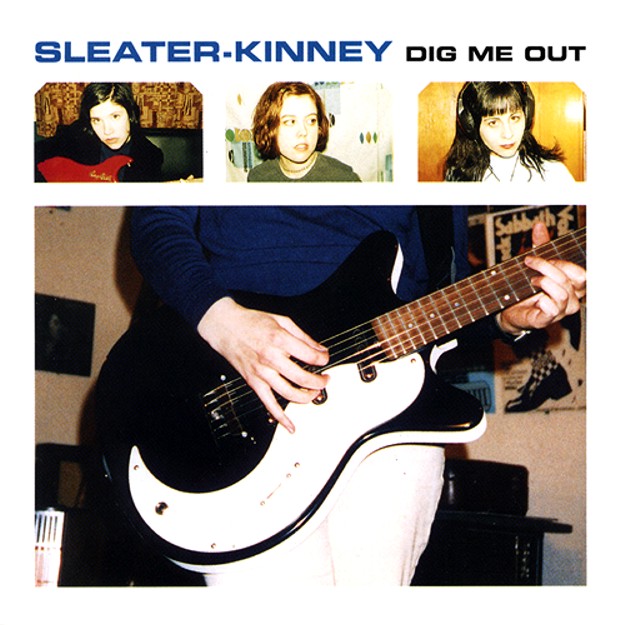
Favorite 90s Albums: #3 – Sleater-Kinney – “Dig Me Out”

At this point, I’m sure people are aware of my deep, abiding love of Sleater-Kinney.  They’re my musical religion, the band that, to me, represents everything that music should be about. All of the elements that make them a definitive rock band to me are present on their 1997 album Dig Me Out, which many fans would argue is their high point as a group.

Admittedly, I’m a big dork about rock music.  For me, it isn’t for blasting in the radio or playing at a party.  Rather, I like to take the term literally:  It should “rock” you, make you think, and wake you up from the constant doldrums of life and humanity.  Alleged “rock” bands that don’t do these things are frequently the target of my ire and it’s a constant disagreement I have with other people.

Dig Me Out is one of my all-time favorite rock albums because it has such a sense of purpose.  It isn’t just trying to sound cool or to be a fun soundtrack to a dance party (although some of the songs are quite danceable).  It wants to jolt the listener, to move them and inspire them.  And for a certain group of people, the types that are disenfranchised with the status quo in both the real world and music world, it does just that, which might explain why the band has such a rabid (but relatively small) following.

For Dig Me Out, Sleater-Kinney brought in a new drummer, Janet Weiss, to go along with Corin Tucker and Carrie Brownstein’s two-pronged guitar and vocals assault.  Weiss immediately gave the band a new-found sense of confidence and swagger, and as a result Dig Me Out sounds like their first album in which they’re aspiring to be a great all-around rock band rather than just a punk outfit.  Her presence was immediately felt in the opening title track, which I consider one of the band’s signature songs.

After the release of their 2000 album “All Hands on the Bad One”, music critic Robert Christgau said of the band: “locked into a visceral style and sound that always maximizes their considerable and highly specific gifts, they could no more make a bad album than the Rolling Stones in 1967.”  It’s a bold statement, but one I find completely true:  Not only can I not imagine Sleater-Kinney making a bad album, it’s hard for me to picture them making a bad song.  Corin Tucker’s attention-demanding vocals, Brownstein’s complex riffwork and vocal chemistry with Tucker along with Weiss’s drumming made Sleater-Kinney into a machine.  It’s apparent on Dig Me Out, which comes storming out of the gate with three of the band’s best songs and never lets up from there, providing an exhilarating 36 minutes of rock and roll.

The oddball song on the album is “One More Hour,” a more personal song that (apparently) details the break-up between Tucker and Brownstein that happened in the early days of the band.  Sleater-Kinney’s style makes the song work perfectly, as the ping-ponging guitars and vocals also play into the idea of the two having had a relationship.  I think it’s one of the all-time great indie break-up songs and it foreshadows the shift Sleater-Kinney would make on their next album (“The Hot Rock”) into more personal territory instead of rousing, occasionally feminist anthems.

I’ve always thought that all-female bands occupied a strange place in music, which might be why I’m so fascinated by them.  The female listeners they’re often trying to inspire often just listen to sensitive guys strumming on guitar, while a lot of male listeners look up to male rock idols in order to seem “manly.”  The band seemed to channel a lot of those concepts into meta songs about being in a band, like the infectious “Words and Guitar.”

The band’s greatness has eventually caused me to dub something called “The Sleater-Kinney Effect”, based on how lame the band is able to make other artists (especially their male counterparts) sound after listening to them.  The effect becomes even more pronounced through time, as 90’s guitar rock went by the wayside and Sleater-Kinney towered over unoriginal post-punk bands and wimpy indie pop in the first half of the 2000s.  In 1997 things probably felt the same way, as Dig Me Out provided a jolt of legitimate female empowerment at the height of the Spice Girls “girl power” movement, and surely inspired many women (including one of my favorite current artists, Marnie Stern) to pick up a guitar.

Despite how convinced I am that they’re one of the best bands ever, I’ve come to accept that Sleater-Kinney is a love-it or hate-it proposition.  Tucker’s vocals are difficult on the ears a lot of listeners and a lot of people are put off by the band’s apparent feminist sloganeering.  At the same time, the idea of listening to Dig Me Out and not being inspired by the passion put into each song is foreign to me, even as a guy who isn’t really the target audience.  More than any other band, I feel like people that love Sleater-Kinney “get it” on a level beyond typical music listeners.

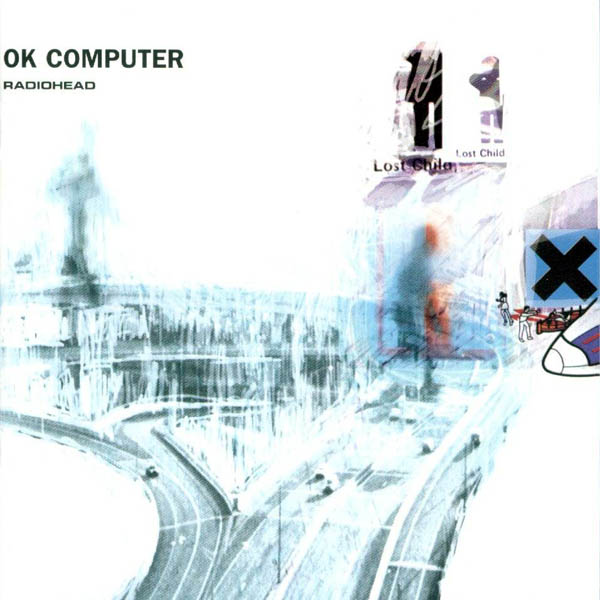
Favorite 90s Albums: #4 – Radiohead – “OK Computer”

I’ve been sort of dreading this one.  What is there left to be written about OK Computer?  By now, I imagine anyone who remotely cares about music has listened to it and formed their opinion on it.  Just about any list of top 90’s albums that is worth anything will have it at or near the top, with most praising it as a landmark album that has come to define the 90’s and everything that came after it.  It’s a prescient album that in some ways predicts how the internet would make music extremely fractured today in 2011.  It’s hard for me to imagine another album being made that unifies as many people as this one, that is celebrated by both the indie sect and more casual music fans.

Since enough has been said about it, I don’t really feel like giving my own inferior analysis of the music.  If you haven’t heard OK Computer, do it.  Now.  Close your door, stop reading this crappy blog, put on your headphones and spend the better part of the next hour listening intently.  Meanwhile, I can at least share what this album means to me personally.

I’m somewhat unique among the musically obsessed in that I didn’t really listen to music at all growing up.  My parents both played some classical stuff on guitar or piano, but there was very little in the ways of contemporary music.  When people asked me favorite bands or songs, I just kind of shrugged and said I didn’t listen to music.  Pretty much all of my musical memories from this time are things I was exposed to unwillingly:  Awful Smash Mouth songs, the collected works of pretty much every late 90’s boy band (thanks to my sister), and most of the other ubiquitous 90’s hits.  There was nothing that I ever sought out myself.

It wasn’t until high school that I began to take at least a casual interest in music.  It probably had something to do with the transition going on in my life, from a previously happy and well-adjusted elementary and middle schooler into an alienated high schooler.  After living a mostly sheltered existence, high school was the first time I saw what the real world was, and for the most part recognized how terrible it is.  I had always been considered funny, witty, and smart by people who knew me, but in high school none of those traits seemed to be valued. Eventually I basically gave up on trying to relate to my peers and became incredibly shy and withdrawn (problems I still struggle with today).  For the most part, I had no real friends that I was seeing regularly and just a handful of acquaintances who I would occasionally talk to.

After each day of high school, I would usually take a nap, but then I’d have nothing to do for the next 7-8 hours (since I rarely did my homework).  And that’s when I began to start seeking out music, partly out of boredom but also because there was this whole world that I had really not explored at all.  For the first year or so (I’m guessing), I latched on to just a handful of bands:  Oasis, Muse, Red Hot Chili Peppers, and The Verve.  And those bands, and pretty much just those bands, became music for me.  I listened to them constantly and didn’t bother finding anything else for a weirdly long amount of time.  (Sidenote:  I still listen to Oasis and The Verve occasionally, but now just hearing one note of Muse and RHCP is enough to almost make me gag.)

Eventually I began to look for more bands, and I decided to try to find bands similar to Muse. When searching, I found a lot of people saying that Muse was simply a worse version of Radiohead (“how could Muse be a worse version of anything?” I thought to myself).  So, I looked up Radiohead, saw that OK Computer was their most acclaimed and recognized album, and decided to give it a shot.

Now this will sound really corny, but it’s true:  OK Computer changed me.  It wasn’t just that it was so beyond anything I had ever heard musically, but it was also the first music that I really felt spoke to me and my situation.  It wasn’t poppy the way the Britpop bands were and wasn’t focused purely on histrionics like Muse.  It was all emotion, and it was all the emotions that I was feeling and felt weren’t being articulated anywhere else.  And it almost instantly sent me down the path from being someone who just listened to some music to being someone that really cared about music.  In a sense, Radiohead (and other bands I grew attached to) replaced the friends I didn’t really have, which might be why I’m so passionate about my favorite artists.

Now, 4-5 years later, I don’t find myself listening to OK Computer as much, possibly because it’s inextricably linked to a time in my life that I’d rather forget.  But I’ll always be indebted to it, and whenever I listen to it again I’m reminded of how powerful it is.  When I hear someone complain that Radiohead is too sad or mopey for them, I just kind of shake my head and chuckle, because I know that they don’t get it and probably never will.  And it reconfirms that, despite their massive popularity, Radiohead is a band that seems like they made music just for me.