One of my dorky music-related hobbies is looking into the past to try to figure out where some of my favorite bands came from. I spend a lot of time browsing on allmusic.com and surfing Wikipedia or last.fm to try to piece the whole puzzle together. Every so often it pays dividends and I find something cool that I may not have ever heard otherwise.
In this case I stumbled across Antena, a band named for French singer/songwriter Isabel Antena. A couple of my favorite bands are Broadcast and Stereolab, who played sophisticated electronic pop with some experimental tendencies, and it’s easy to see Antena as an early influence on both of them. The most obvious comparison to Isabel Antena is Stereolab frontwoman Laetitia Sadier, who was also French and had an elegant way of singing, but she also reminds me of Broadcast’s Trish Keenan whose voice had similarly detached, airy qualities that hovered above the music.
Musically, Antena reminds me a lot of Young Marble Giants, whose album Colossal Youth was released around the same time the band formed. Their sound is similarly austere, with electronic synths and drum machine rhythms. What makes Antena sound different from all these other groups is that they infused samba rhythms into the music, giving them a more tropical, summery feel. It’s an interesting combination that I hadn’t really heard before and is part of what has gotten me instantly hooked on the band.
So far I’ve only listened to the band’s 1982 compilation Camino Del Sol, which comprises nearly all of their early music. It’s full of some really cool songs, but so far my favorite is the title track which shows off most of the band’s strengths. You can listen to that song below, or the full album on Spotify here. If you’re into this brand of sophisticated electro-pop, they’re definitely worth a listen.
On May 3rd, Spin released their list of the 100 greatest guitarists of all time. The list — which contained non-guitarists like Skrillex and omitted famed guitar players like Jimi Hendrix and Jimmy Page — was lambasted by most music writers I follow and the general populace, who accused it of being trollish clickbaiting and accused the magazine of being contrarian just for the sake of it. I find those accusations to be at least partially true, but at the same time found myself loving the Spin list, which took a tired subject matter and breathed some life into it with a different perspective.
The first thing people need to know about any list, especially a music list, is that it’s subjective. This seems really obvious, but every time one of these magazines puts out this kind of list, there are always the commenters who need to step in line first and complain about how so-and-so wasn’t on the list, or that some guy was ranked ahead of some other guy. Don’t be fooled by the title: the Spin list was not intended to be an objective ranking of the greatest guitarists; it was meant to be a rethinking of what it even means to be a great guitarist, and a sort of counterargument to the Rolling Stone-led hagiography of 50s-70s music.
The other thing the Spin list was trying to accomplish — and succeeded at — was exposing readers to different kinds of artists than you usually see on great guitarists lists. As someone who loves making music lists and reading them, I think that the ideal list should make you think and it should expose you to music you may not have heard before. If you’re reading this blog or Spin or any other music criticism, I would hope that it’s for that reason, and not because you want to have your pre-existing opinions validated by some random writer.
With their list, Spin challenged readers, and frankly most of them weren’t up to it. They just wanted to read the list and see the same names they always see on these things, as if someone’s opinion that Jimi Hendrix was a really good guitarist somehow needed more validation from a music magazine in order to be legitimate.
Spin‘s views on what makes a great guitarist mirror my own somewhat closely. My opinion on it is this: the point of music is to make you feel emotion and to make you think. Guitar is one way to do that, and certainly having a lot of technical ability on the instrument helps. But at a certain point, if things get too technical or show-offy, the emotion in the music is lost and it simply becomes an exercise in the guitarist showing off his skills. I’ve never related to the canonized list of great guitarists, which always has placed an emphasis on masturbatory guitar solos and pure technical skill over the ability to conjure emotion, when the entire point of music is that it should make you feel things.
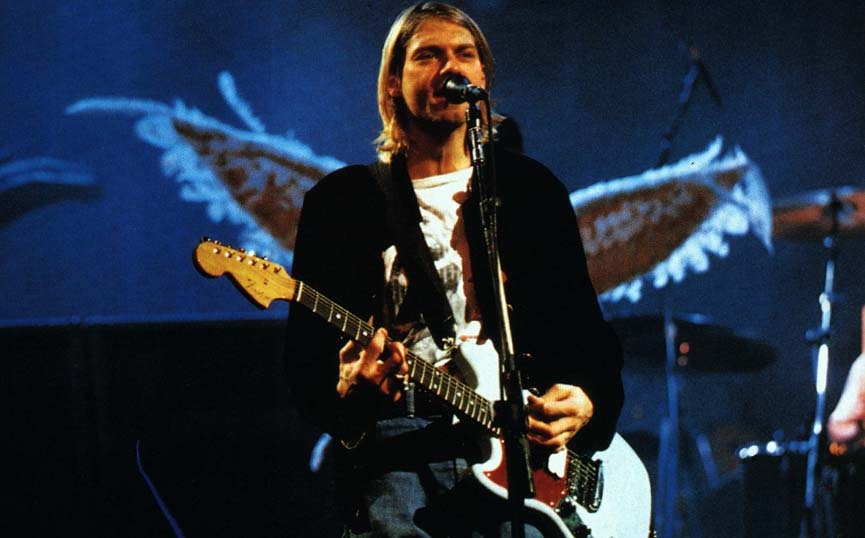
Take Kurt Cobain. He is usually ranked high on these guitarist lists, and in any comments section you can bet there are multiple people saying that “he could barely play guitar” or that “he only played three chords.” But none of that is really important. What’s important is that Cobain was the guitarist of a guitar-driven band that had a massive emotional impact on tons of people. So how is he not a great guitarist? Cobain may not have been show-offy on the guitar, but he used it to make people feel things on a visceral level, which is what a guitarist should do.
The guitarists on these lists that I usually can’t stand — and weren’t on the Spin list — are guys like Jimmy Page and Stevie Ray Vaughan. In the case of Page, I accept that he is a skilled guitar player who hammered out some classic riffs, but I’ve never been able to emotionally connect to a Led Zeppelin song, partially because there never seemed like a purpose to his excessive playing and partially because of their incredibly dumb lyrics. Vaughan, on the other hand, is by all accounts an immensely skilled player, but I can’t believe that people actually listen to his music. After about a minute I’m bored and think “I get it, you can play a lot of notes on the guitar in rapid succession.”
But these are just my opinions, and they’re probably different from yours. That’s why music is great, and that’s what made the Spin list great. It embraced the inherent subjectivity of these lists, and instead put the focus on a different group of artists that are rarely recognized by the music elite (like, you know, women). In doing so, they pissed off a lot of self-righteous guitar snobs and stupid internet commenters, but for people with an actual open mind it sparked a lot of interesting discussion.
Are bands like Trampled By Turtles overexposed in Minnesota?
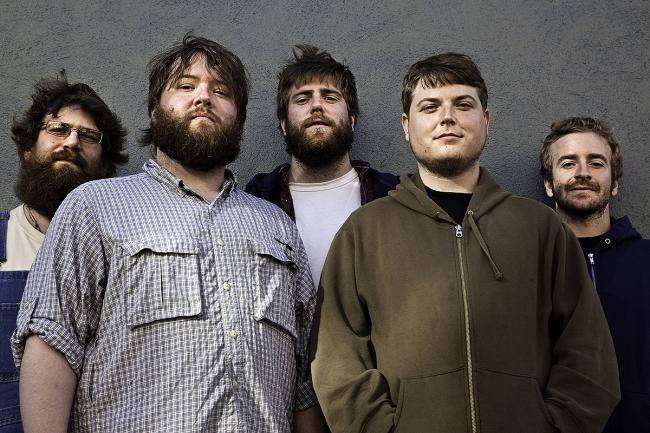
Last weekend, local radio station The Current hosted their annual Rock the Garden music festival, which takes place at the Walker Art Center and has typically been a collection of relatively big name indie artists. Previous headliners included artists with national followings like Neko Case, My Morning Jacket, and The Decemberists, with usually one local act thrown in. However, this year, four of the five headliners — Howler, Doomtree, Trampled by Turtles, and The Hold Steady — were Minnesota-based groups. That sent a clear message from the folks at The Current: “Our local music is amazing, and we don’t need bands from anywhere else.”
The Rock the Garden lineup was subject to quite a bit of criticism, because what was supposed to be a chance to see artists that don’t play in Minnesota all the time turned into another exercise in The Current and Minnesotans patting themselves on the back for all of the supposedly great music that has come from the area. This is nothing new. It’s part of an increasing and ongoing obsession with local music that has baffled me for months now.
It could just be a problem on my end, because I’ve never really understood the appeal of local music in the first place. To me, music is music. A guitar played in California or England makes the same sound as one played in Minnesota. This may seem obvious, but around here there is an unhealthy love for bands that I don’t think anyone would care about if they hadn’t formed in a place that was located near where they live. The Minnesota music scene is like the child of average intelligence who has overbearing parents that insist that they are “special.”
In this simile, the overbearing parent is The Current, who relentlessly shoves these bands down our throat, either because people inexplicably want to hear them all the time or because they want to establish credibility by linking themselves to local bands made good. Turn your dial to 89.3 or stream online, and chances are you’ll hear the end of a mediocre song, followed by one of the DJs gushing over the “great, great local band” that produced it. There’s also a local music blog, filled with embarrassing fawning posts like Is Minnesota Music in a Golden Age? (answer: yes). It’s rare to see any sort of criticism directed towards the local music scene here, which is why it was shocking when 19-year old Howler frontman Jordan Gatesmith spoke out in an interview with The Guardian:
Yeah, it’s weird, because you know the ’80s saw a great hardcore and punk rock scene, Hüsker Dü kind of being the leaders of it, and The Replacements as well. And Prince was there, which was a whole different thing all together. Completely different. But yeah, I feel like there’s this giant lull period of like 30 years. We had Tapes ’N Tapes kind of come out for a little bit, so that was kind of interesting, but the scene right now is interesting. It really supports its own bands, like they’ll build up these bands—no offense, Minneapolis—that I will hate. I will completely hate. But they’ll like sell out the biggest room in Minneapolis.
There’s this band called the 4onthefloor, for example, and the gimmick is that they play, you know, they have four kick drums, and they all play the kick drum on the floor, and they’re like Mumford & Sons crap. I’m sorry. But that will get huge. They’ll do like crazy big venues, then everyone will be like, ‘Yeah! 4onthefloor is the band to watch! Everyone get ready!’ And then, of course, nothing will happen outside of Minneapolis for them.
Of course, this statement quickly set off a local firestorm. “How could he say that about all of our wonderful Minnesota bands?” seemingly everyone wondered. I’m no fan of Gatesmith or his music and think he probably could use a good slap in the face, but his points about the local scene struck me as fairly accurate. When I hear most of the local music that is getting airplay, none of it seems particularly groundbreaking or exciting. Let’s face it: Trampled By Turtles, Doomtree, Atmosphere, and Cloud Cult aren’t exactly Husker Du, The Replacements, Prince, and Bob Dylan. These are middle-of-the-road indie bands at best that have been elevated to god-like status because they happen to be from Minnesota. They may be popular among locals and might occasionally appear on Late Night With Jimmy Fallon, but they are not innovators and are not bands that anyone will care about 10 years from now.
I don’t mean to criticize all local music. I support a few local bands, but because I think they make good music that is worthwhile, not because they are local. These are the kinds of bands that are usually ignored by the local media hype cycle, which focuses on artists with a more accessible sound that have a chance to be “the next big thing” rather than groups that are experimenting and doing things differently. When The Current plays a local band that ends up getting national press, they can go back and say that they played them from the beginning, and I think that drives a lot of their decision-making. This is also why they fawn indulgently over every local band — so that when Trampled By Turtles ends up playing the coveted 5:45 day two slot at Bonnaroo, they can take some of the credit.
More than anything else, this fixation on local music is bizarre to me because it seems so counter to everything that makes living in 2012 great. These days, you can find music from anywhere. I’ve discovered bands from all over the world that I probably never would have heard of if not for the internet, and sites like bandcamp make it incredibly easy to have access to their music. So it just doesn’t make sense to me that people limit their exposure and focus on this one random area when there is so much great stuff out there and readily available. It seems archaic.
A local radio station like The Current should play some local music, but right now it does it at the expense of other, far more interesting bands that are implied to be less worthy because they’re not from the right area. My ideal radio station is one that exposes me to cool music I might not find otherwise, which is why it bums me out that The Current has chosen to instead suck up to bands that are already overexposed, repeatedly playing them in the same way that a pop station plays Katy Perry.
For all I know, this could be the kind of thing that happens in all major areas. There is obviously a natural inclination to think that your home state is culturally better than others. But from my vantage point, Minnesotans are unusually proud of a music scene that hasn’t really done anything noteworthy in a long time. It would be nice if everyone could tone down the love, have a bit of perspective, and admit that maybe these bands and our state aren’t as special as we think.
 The Noise Made By People