Favorite 2000s Albums: #7 – Radiohead – “Kid A”

Listen on Spotify

I can’t speak for all Radiohead fans, but the music I initially loved by the band was showcased on 90s albums The Bends and OK Computer, a complex yet accessible guitar-based alternative rock sound. The story of 2000’s Kid A is well-known by now — burdened by the expectations of following up OK Computer and looking to evolve as a band, the group reinvented themselves, creating an atmospheric, electronic-based album that has little in the way of radio-friendly singles or mainstream appeal. At least that was the idea, but Kid A became one of the oddest chart-topping albums in music history.

Personally, I hated it. I began getting into Radiohead chronologically, and after loving The Bends and especially OK ComputerKid A felt like a slap in the face. I felt like the band had betrayed me and that Kid A was just a calculated attempt to piss off my adolescent self who wanted more big guitar songs about being depressed. Even today, it seems like there is a divide among Radiohead fans between those who love their 90s guitar albums and those who prefer their more complex,challenging output from the 2000s.

It took a couple years before I decided to revisit the album, and since then I guess my tastes had evolved somewhat. I suddenly had an urge to listen to Kid A. This time it clicked and made sense to me. (It was strikingly similar to this Onion article where Bill Gates finally gets into the album after several months.)

Nonetheless, I still feel slightly ambivalent about it, because Kid A received such a massive amount of slobbering acclaim at the end of 2009, when it topped most publications’ end of decade lists. It bothers me because I think Kid A has become more about a narrative surrounding the album than its actual music — it’s about the internet age, or the changing landscape of music, or the growing influence of electronica, or whatever. I’ve never felt comfortable shoving an album into a narrative box the way everyone seems to do with Kid A.

Instead, I would rather think about Kid A as it pertains to Radiohead themselves, which is where I think its true greatness lies. For a band in their position, it was an incredibly risky album. These days, it’s hard to imagine another band in that position pulling off such a radical shift when they could easily succeed by doing what they’ve been doing. Kid A is very unique in this regard: it required a band like Radiohead having confidence in themselves that they could make it, but also confidence that their rabid, intelligent fanbase would go along with them on the journey.

Kid A didn’t exactly come out of the ether though — listening to OK Computer, I can sometimes hear the beginnings of this phase of the band (especially on tracks like “Fitter Happier” and “No Surprises”) and the album has clear influences in electronica, jazz, and krautrock. Plus it still sounds like Radiohead, mostly because of Thom Yorke’s signature voice, which is always recognizable even when he’s singing lyrics that are often incomprehensible.

Kid A boasts what is probably the best opening song of the decade with “Everything In Its Right Place.” It’s an incredible tone-setter, its lack of guitar and ominous electric piano part instantly indicating that this is album is going to be different. Overall, what sometimes gets forgotten about this album is that it has incredible pacing, the perfect opener giving way to the abstract title track and then the throbbing bass groove of “The National Anthem” (which I wish really was the national anthem).

After Radiohead comes out of the chutes with the most distant, abstract music of their careers, the back-half of Kid A is more accessible. Guitar-driven “Optimistic” is the closest Radiohead comes to recalling their 90s sound, but it has more experimentation than some give it credit for, especially with the jungle-style rhythms. It’s my favorite song on the album, as a testament to my perpetual uncoolness. “Idioteque” is the album’s beat-heavy centerpiece, and it bleeds into “Morning Bell” which is another more accessible song that seems to foreshadow the band’s work on In Rainbows.

Radiohead forsaking their rock roots for Kid A looks especially prescient now after a decade where The Bends style rock fell out of favor with most people. Radiohead had already gained a reputation for making amazing music, but Kid A is where they became known as game-changers and trendsetters, fully establishing themselves as a band that would always play by their own rules.
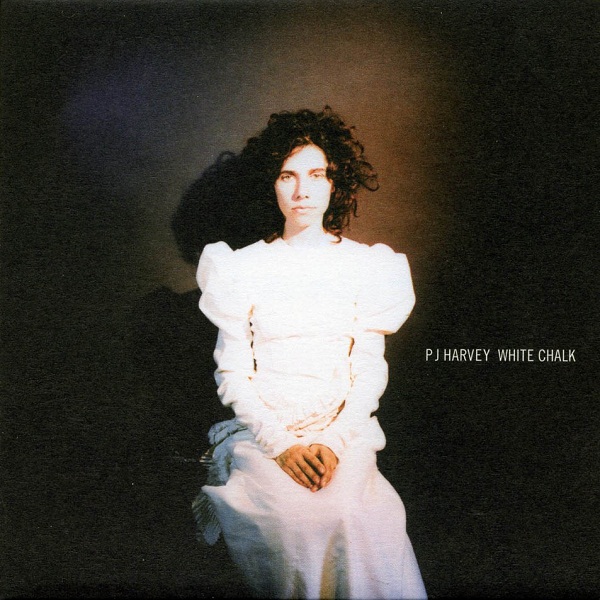
Favorite 2000s Albums: #8 – PJ Harvey – “White Chalk”

Listen on Spotify

In 2004, PJ Harvey released Uh Huh Her, the one album in her catalog that I don’t consider myself a fan of. It’s not a bad album, but its lo-fi guitar tunes felt like a retread coming from an artist who I’ve always loved because of how she defies expectations. While some always wish that PJ would keep making music that has a certain sound, I think she’s at her best when experimenting and doing something that nobody expects her to do.

This is why I think 2007’s White Chalk is probably her most underrated, and possibly the album by her I respect the most. After being known early on for her aggressive bluesy guitar songs (and even being acclaimed earlier in the decade for the straight-forward rock of Stories from the City, Stories from the Sea), PJ chose to set down the guitar entirely, instead writing a set of songs for the piano — an instrument she admittedly barely knew how to play. She also traded in her deep roar of a voice, singing the songs on White Chalk in a high, ethereal voice that is at the very top of her range.

The resulting sound is ghostly, eerie, creepy, but also beautiful. It creates a unique distillation of moods that only PJ Harvey ever seems to be able to conjure out of me. It blows my mind that the same artist who made this album also made Rid of Me, which topped my 90s list and was pure anarchy, chaos, and rage. On White Chalk, everything is extremely delicate, including PJ’s personality which has gone from larger than life (like on “50 ft Queenie”) to someone who seems unsure of herself at every turn. Meanwhile, Rid of Me‘s swaggering rock has been replaced by songs that rarely feature much more than the piano or a broken harp.

White Chalk ends up pulling off something that very few modern albums do: it sounds completely unlike anything else that came before it. It is an incredibly self-contained work that manages to create its own little universe in the span of 34 minutes. PJ takes everything that makes her unique and identifiable as an artist and reduces all of it to the bare essentials.

Despite the new sound and a completely different persona, White Chalk is still identifiable as a PJ Harvey album. The one constant in her work over the years has been her lyrics, and on White Chalk they hit harder than ever with the spare instrumentation. A recurring theme throughout the album seems to be childbirth or abortions: on “When Under Ether” she sings “something’s inside me/unborn and unblessed/disappears in the ether/one world to the next,” joined by an ominous, repeating piano line. The title track is one of my favorite songs by her, a lovely meditation on her homeland of Dorset that also references an unborn child at the end.

Most of White Chalk is about a feeling of being solitary and lonely, but it’s also a more hopeful album than some give it credit for. “Before Departure” sounds like a funeral song of sorts, but I think it’s more about a choice to live a simpler life. “Silence” has similar themes, with PJ singing “I freed myself and remained alone.” Of course, there’s plenty of darker material on the album too, which is par for the course for PJ.

While critics usually lap up anything that PJ throws their way, the response to White Chalk was more muted, understandably so. It’s an extremely hard album to pin down from an artist who is the same way. It’s also not the type of album that ever makes these silly end-of-decade lists — it was perhaps self-contained to a fault, containing little in the way of broader statements about modern culture or life. With some patience, though, White Chalk proves itself to be maybe the most daring album in PJ’s catalog, an album that is completely unlike anything else and reveals its greatness slowly, in a different way than its predecessors.

Favorite 2000s Albums: #9 – Fiona Apple – “Extraordinary Machine”

Listen to the official version on Spotify

I’ve always felt a weird connection to Fiona Apple and her music, even though it never really feels like it was intended for me. Mostly because I think she’s misunderstood — as an artist and as a person — due to various incidents and media portrayals. Apple broke through at age 19 with her album Tidal and was instantly thrust into the public spotlight. The results were some unflattering, extremely public moments — namely her controversial music video for hit single “Criminal”, which showed her parading around in nearly no clothing while looking potentially anorexic, and her infamous “this world is bullshit” speech delivered at the MTV Video Music awards after winning for Best New Artist. Along with some on-stage meltdowns, those moments have colored most of the public’s perception of Apple, who is often seen as a poster-girl for pretentiousness and flakiness.

I had the same preconceptions about her before I seriously listened to a note of her music. I knew the name from the “Criminal” video and I knew some of the songs off Tidal. I assumed, like many others, that not only was she an annoying person, but that her music was also bland. In my mind, I had associated her with that Lilith Fair/coffeehouse style of music that is an over-serious woman playing on a piano while reciting crappy poetry and quoting Maya Angelou.

I still sort of feel that way about Tidal, but she released that album when she was 19. 19! I don’t even remember anything I did when I was 19, but it certainly wasn’t noteworthy and I definitely wouldn’t want the world judging me by it. Meanwhile, Fiona’s music matured from there, and her 1999 album When the Pawn… (which has a 90 word title that seems to consciously stick it to people that labeled her as pretentious) is when her music really clicked for me. It was the complete opposite of what I had often imagined her music being: it was creative, it had tempo changes and often eschewed typical pop verse-chorus structure, and it had some arrangements that really surprised me. On top of that, Apple continued to have that jazzy contralto voice and her lyrics are very smart and insightful with clever rhyming. Definitely not crappy poetry. Predictably, the album sold about 1/3 of the copies that Tidal did.

Fiona’s career and reputation faced another challenge after that, as Extraordinary Machine became one of the more memorable fiascoes of the decade. After recording for the album with Jon Brion (who produced When the Pawn…), Apple was reportedly unhappy with the results, which led to the album being shelved. The tracks eventually leaked online, and the infamous bootleg led to an online campaign called “Free Fiona” that sought to get the album an official release. Eventually Apple enlisted Mike Elizondo to re-record the tracks and Extraordinary Machine was finally released in 2005.

The official version gets inevitably compared to the bootleg version, and I personally enjoy some of the takes by each producer. If nothing else, the bootleg is a fascinating glimpse into the role a producer plays and it’s interesting to see what Fiona disliked about the original version. For the most part, her voice shines through more on the official release, while it’s sometimes buried under the excessively ornate instrumentation of the bootleg.

Regardless of which version you listen to, Fiona’s songs are intact, and they’re arguably the best of her career. They cover the same thematic territory that she usually does — primarily relationships and self-reflection — but her lyrics are wittier and more incisive than before. Musically the album feels like a throwback that doesn’t really belong in this decade, with the sounds of early musicals and more oddball baroque instrumentation sometimes joining Apple on her piano. Nothing on the album comes all that close to the traditional radio-friendly piano pop on Tidal.

There are many highlights on Extraordinary Machine, particularly “O’Sailor”, which gets weakened a bit on the official release compared to the bootleg version that has a slower tempo and a minute more length to create its dreamy atmosphere. “Red Red Red” was overproduced on the bootleg but becomes one of the official album’s finer moments thanks to more subtle strings and a more reflective, down-tempo mood. Part of the fun with the album is comparing and mixing and matching the two versions (I eventually created a playlist of the ideal version using my favorite cut of each song).

Extraordinary Machine is a quirky, individual album that captures Fiona’s strengths as an artist extremely well. It feels very detached from any other albums I’ve heard from the decade and I give Apple a lot of credit for following her own artistic muse and forsaking commercial success that probably could have come easy to her after Tidal. Despite all the hoopla around the album’s release and the artist, Extraordinary Machine proves that she’s genuine as an artist and also possesses a phenomenal combination of voice, lyrical abiity, and imagination. This is where many music writers would call her an “extraordinary machine”, but I’m not going to do that because I have too much integrity.

What I think really draws people to Fiona Apple and has allowed her to create a fervent following is that all of her songs seem to be deeply meaningful to her and are sung with great conviction. Her pattern of releasing music seems to confirm this: with three albums (and soon a fourth) in 16 years, she isn’t one to just churn something out to make money. I think the fact that she takes her art seriously is sometimes confused for pretentiousness. Extraordinary Machine was her only album from this decade, and its long awaited follow-up, with its Fiona-y title “The Idler Wheel is wiser than the Driver of the Screw, and Whipping Cords will serve you more than Ropes will ever do” will finally arrive in June.