This is normally the time when I’d write my obligatory list of my favorite albums of the year. I won’t be doing that this year, for a couple of reasons. The first is that lists have been permanently ruined for me by the demonic overlords who run Buzzfeed and every other lazy clickbaity site, to the point that just seeing numbers in order on my screen is enough to fill me with rage and contempt. As far as I’m concerned, lists are now tools of Satan, and you will no longer see them here. The second reason is that I found myself getting extremely disconnected from music this year, and even if I did want to make a list to please Satan, I’m not sure if I could even think of ten (much less 25 or 50 — how do people like so many things?) albums that made much of an impact on me.
I’m not entirely sure what caused this disconnect — I’ve always been relatively picky, but I can’t remember being so consistently unmoved by music like I was for most of this year. It’s possible that I’m just already a jaded old person and have given up and entered the feared “music will never be like it was” stage of my life. I continued to follow music discussion and writing, but mostly found myself being increasingly annoyed at which bands were getting covered and which ones weren’t. It legitimately felt like the worse a band was this year, the more hype they got and the more people talked about them and wrote about them, and it kind of made me feel like I was going insane. The whole world was trying to convince me to like all these bands that could not possibly be less interesting. (People trying to tell me who or what I should care about is one of my biggest pet peeves.)
I graduated from college this spring and spent the rest of the year procrastinating on entering the real world and being generally unproductive and useless. I wasn’t sure what I wanted to do or how I wanted to do it, and all of these feelings and fears ended up paralyzing me until suddenly I’d let the whole year go by without really doing anything, which (I’ve been told) is bad. I spent most days by myself in the suburbs being a slacker and internally debating how I was going to ever become a semi-functioning adult (still working on it — if anyone has tips on this, feel free to leave a comment or something). On one of these days, I opened up Twitter after probably waking up at some absurdly late hour and came across a link to a song called “Avant Gardener.”
I had never heard of Courtney Barnett before this, but was immediately enamored with this song. I loved the simple rock instrumentation, Barnett’s deadpan almost-speaking delivery, and especially the lyrics, which described that sort of suburban suffocation feeling I had with an eerie level of accuracy. In a year where I often felt like I wasn’t connecting with music, “Avant Gardener” was the one song that really spoke to me and reminded me of why I loved music in the first place. Beyond my personal connection to it, it’s also a tremendous piece of craft from Barnett, with tons of witty lines and a surprisingly compelling story considering it’s about someone freaking out while gardening.
Barnett is a 25 year-old from Melbourne, Australia, who defines her music as “slacker garage pop.” Her first two EPs, I’ve Got a Friend Called Emily Farris and How to Carve a Carrot Into a Rose, were compiled on The Double EP: A Sea of Split Peas, which was one of my favorite releases of the year. Barnett’s self-described slackerdom is fitting, because what I really love about these songs is that they don’t sound like they’re trying too hard to win you over. Instead, Barnett is able to find great power in simplicity. The lyrics are incredibly smart and witty without sounding like someone who is desperately trying to appear intelligent. Her singing is not what one would call show-offy, but it’s the perfect fit for the droll lyrics and the music.
“Don’t Apply Compression Gently,” one of my other favorite songs on the album, is a good example of this. The music is fairly straight-forward, and the lyrics are so simple that they could be text messages (I even saw one article saying they actually were texts, but have no idea if this is true). Yet I found it to be a very poignant song, because everything fits together well and because of Barnett’s understated charm as a vocalist, particularly in the closing refrain: “I may not be 100% happy, but at least I’m not with you.” One of the other album highlights, “History Eraser,” is in a similar free-wheeling style to “Avant Gardener,” and shows Barnett’s ability to craft interesting narratives about seemingly mundane topics — in this case, a song beginning with “I got drunk and fell asleep atop the sheets” spins into an amusing day-in-the-life story.
There are approximately a zillion of these sorts of folk-rock albums released every year, many of which I find one-dimensional and boring. What made this one work so well for me was Barnett’s personality — her songs are so smart, funny, and true, and I guess she just seems like a cool person who I’d like to get to know better. Hopefully we’ll all get that chance as she releases more music in the future.
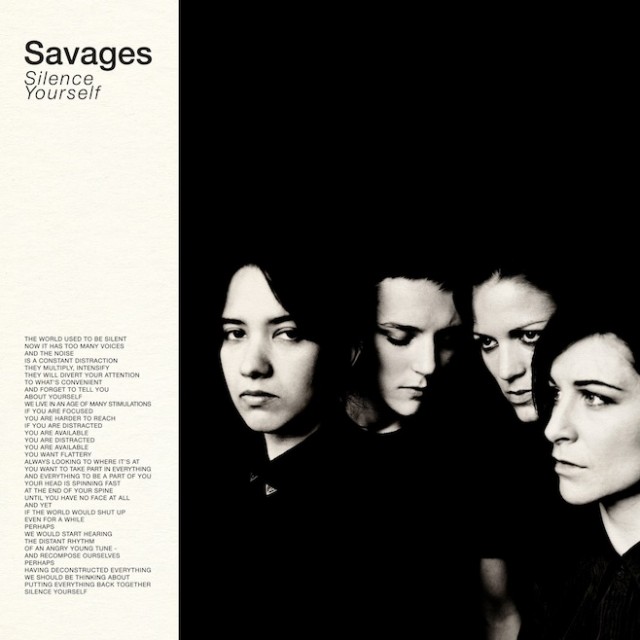
 The biggest challenge of writing about music is trying to describe why I like what I like. With some artists, it’s not too hard, because something about their music or personality lends itself to narrative, or they played a role in my life that makes for a decent story. Others are more difficult — the music might just sound the way I like music to sound, in which case there isn’t a whole lot to say other than “This is really good, in my opinion. Maybe you will like it too.” These bands may not make for the most interesting blog posts, but they are a large part of my music collection, and really define my taste more than the bigger name artists.
 The Noise Made By People